
Banking is changing fast, and artificial intelligence (AI) is leading the way. AI banking apps will transform how we handle money, communicate with banks, and make financial decisions by 2025. Whether you’re into technology, learning to code, or working in banking, knowing the latest trends, challenges, and opportunities in AI-driven banking is important.
In this blog, we’ll take a look at the future of AI in banking, share real-world examples, and give practical tips for beginners who want to get started in this growing field. We’ll also talk about common mistakes and how to avoid them so you can confidently step into the world of AI banking. Let’s get started!
Table of Contents
- AI Banking Mobile App – Overview
- Key Advantages of AI Banking Apps
- AI-Powered Banking App V/S Ready-Made Banking App
- AI in Banking: Important Information and Statistics
- Blueprint to Develop Banking App
- Barriers and Fixes in the Development of AI Banking Apps
- Real-Life Example
- Cost Breakdown of Developing AI Banking App
- Wrapping Up
AI Banking Mobile App – Overview
An AI Banking Mobile App is a financial application that leverages Artificial Intelligence (AI) to provide users with personalized, automated, and secure banking services. These apps integrate AI-powered technologies such as machine learning (ML), natural language processing (NLP), predictive analytics, and robotic process automation (RPA) to enhance user experience, optimize financial management, and improve security.
Key Advantages of AI Banking Apps
AI-powered banking apps offer advanced features that improve user experience, security, and financial management. Here are some key features:
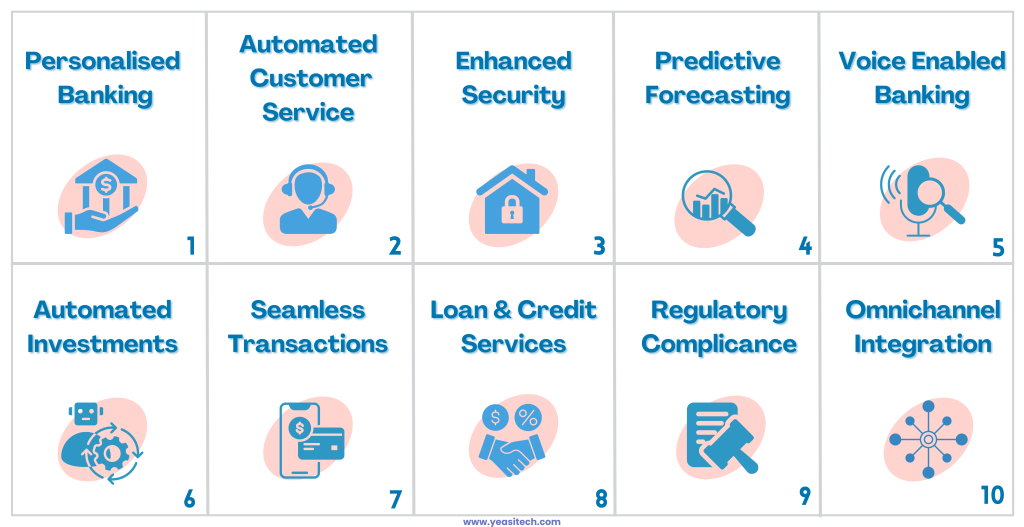
1. Customers’ Banking Experience Becomes Way More Personalised
- AI-driven insights and recommendations based on spending habits.
- Customized financial advice and investment suggestions.
- Smart notifications for bill payments and savings opportunities.
2. Automated & Virtual Customer Support
- AI-driven chatbots for 24/7 customer service.
- Virtual financial assistants to help with budgeting and expense tracking.
- Auto-categorization of transactions for better financial planning.
3. Fraud Detection & Security is Better
- AI-based fraud detection systems analyze transaction patterns.
- Biometric authentication (face ID, fingerprint recognition).
- Real-time alerts for suspicious activities.
4. Predictive Analytics & Forecasting Help Make Better Decisions
- Use expenditure patterns to forecast future costs.
- Companies use cash flow forecasting to improve financial management.
- Lenders use AI to assess creditworthiness for loan approvals.
5. Voice & Conversational Banking for More Accessibility
- Voice-enabled transactions and banking assistance.
- Platforms like WhatsApp, Messenger, or Alexa integrate AI chatbots.
- Speech recognition for secure authentication.
6. Automated Savings & Investments by Robo-Advisors
- Users can invest small amounts of money automatically through AI-powered platforms, so people don’t have to spend their brain power and time thinking of their investments.
- Robo-advisors manage wealth management.
- Smart portfolio rebalancing based on market trends.
7. Seamless Transactions & Payments
- AI-assisted payments and expense tracking.
- Auto-payment scheduling and reminders.
- QR code and NFC-based transactions for quick payments.
8. Enhanced Loan & Credit Services
- AI-powered loan approval and credit risk assessment.
- Instant loan disbursements with minimal paperwork.
- Personalized credit offers based on user behavior.
9. Regulatory Compliance & Risk Management
- Companies use AI to monitor compliance.
- Automated risk assessment for transactions and investments.
- Anti-money laundering (AML) powered by AI.
10. Omnichannel Integration
- Users enjoy a seamless banking experience across mobile, web, and wearable devices.
- Businesses use AI-driven customer service across multiple channels.
- Integration with third-party financial apps for enhanced functionality.
“Did You Know? Some AI banking apps let you check balances, transfer funds, and even pay bills using just your voice!
AI-Powered Banking App V/S Ready-Made Banking App
Here’s a comparison table between an AI-Powered Banking App and a Ready-Made Banking App so that you can get a clearer picture:
AI in Banking: Important Information and Statistics
- Improved Experiences with Customers: By 2028, it’s projected that 85% of customer interactions in banking will be powered by AI, leading to improved customer satisfaction and operational efficiency.
- According to a McKinsey report, artificial intelligence (AI) has the potential to be worth up to $1 trillion in banking and finance.
- About 80% of banks see the potential advantages of artificial intelligence (AI) in the banking industry, according to Business Insider.
- Potential for Revenue Generation: By 2035, AI is expected to generate $1.2 trillion in value for the banking industry, highlighting how important it is in promoting innovation and financial progress.
Blueprint to Develop Banking App
Careful planning, security precautions, and innovative AI skills are necessary when developing a banking app that uses AI. Use these simple methods to make your vision a reality!
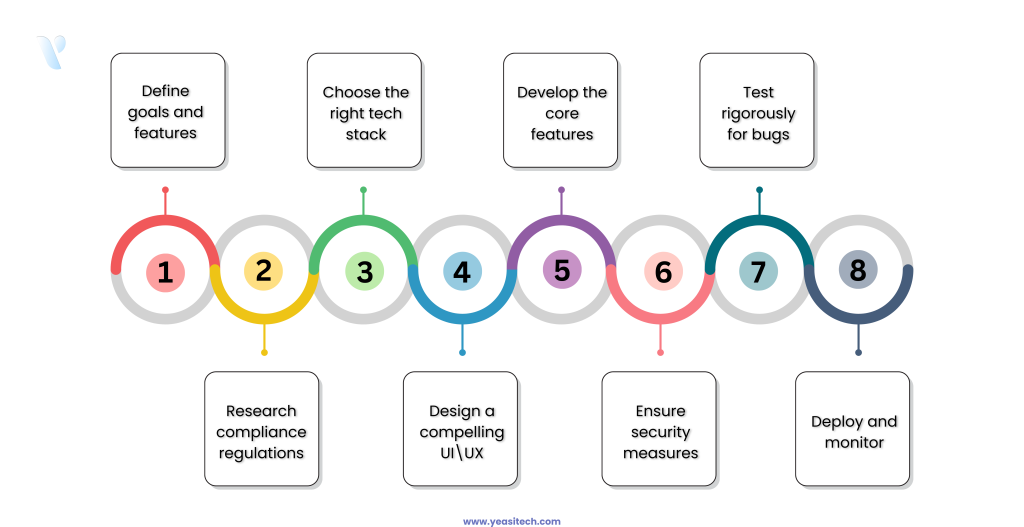
Step 1: Define Your Goals and Features
Before diving into development, decide what you want your AI banking app to do. Some key features include:
- AI Chatbot – for 24/7 customer support.
- Fraud Detection – to prevent unauthorized transactions.
- Personalized Insights – helping users manage finances better.
- Voice & Facial Recognition – for secure logins.
Step 2: Research Regulations & Compliance
Banking apps must follow strict regulations like:
- GDPR (for data protection in Europe).
- PCI DSS (for secure card transactions).
- KYC & AML (for identity verification and fraud prevention).
Step 3: Choose the Right Tech Stack
Your app needs a solid foundation. Here’s a tech stack recommendation:
- Frontend: React Native or Flutter for cross-platform development.
- Backend: Python (Django) or Node.js for secure API management.
- Database: PostgreSQL or MongoDB for data storage.
- AI Frameworks: TensorFlow, OpenAI API, or IBM Watson for AI functionalities.
Step 4: Design an Intuitive UI/UX
Users should feel comfortable navigating your app. Follow these UI/UX principles:
- Simple and clean interface – Avoid clutter.
- Easy navigation – Users should find everything quickly.
- Accessibility features – Voice commands and larger text options.
Step 5: Develop the Core Features
Start by coding the most critical functionalities:
- User Authentication – Implement biometric logins for security.
- AI Chatbot & Support – Integrate NLP models to handle queries.
- Smart Budgeting Tools – AI-driven spending analysis for users.
- Fraud Detection – Machine learning models to detect suspicious activities.
Step 6: Ensure Security Measures
Banking apps must be highly secure! Implement:
- End-to-End Encryption – Protects user data.
- Multi-Factor Authentication – Adds an extra layer of security.
- Regular Security Audits – Keeps your app safe from hackers.
Step 7: Test Rigorously
No one likes a buggy app! Perform:
- Unit Testing – To test individual features.
- Penetration Testing – To check for security vulnerabilities.
- User Testing – Gather feedback from real users.
Step 8: Deploy and Monitor
Once tested, launch your app on the App Store and Google Play. But your work doesn’t stop there!
- Monitor AI performance – Improve chatbot responses and fraud detection.
- Update features regularly – Add new AI-driven tools based on user feedback.
Step 9: Scale and Innovate
Keep improving! Introduce robo-advisors, crypto banking, or even voice-activated banking for the future.
And that’s it! You now have a roadmap to developing a powerful AI banking app. Yet confused regarding the steps? Book a free session with our Experts and get expert advice for free.

Barriers and Fixes in the Development of AI Banking Apps
Developing financial software with AI sounds interesting, but there are obstacles to overcome. The good news? Every challenge has a solution! Let’s explore them in a simple and engaging way:
1. Data Security & Privacy Risks
Problem:
Because AI banking apps manage private user information, hackers are particularly interested in them. Financial losses and a decline in client trust could result from a security breach.
Solution:
- Employ end-to-end encryption to protect user information.
- For safe logins, use multi-factor authentication (MFA).
- Pay attention to strict security laws such as PCI DSS and GDPR.
2. Compliance with Banking Regulations
Challenge:
Financial institutions must comply with KYC, AML, and GDPR regulations. Failing to meet these regulations can lead to legal troubles.
Solution:
- Partner with legal experts to ensure compliance.
- Use identity verification driven by AI to automate KYC procedures.
- Regularly update the app to meet evolving regulatory requirements.
3. Bias in AI and Inaccurate Forecasts
Challenge:
AI systems can learn from historical data, but if that data is biased the AI may make unjust judgments, such as randomly refusing loans to particular users.
Solution:
- Train AI models using diverse and unbiased datasets.
- Conduct regular audits to check for unfair biases in predictions.
- Use explainable AI (XAI) so decisions are transparent and understandable.
4. User Trust & Adoption
Challenge:
Many users hesitate to trust AI to handle their money. If the app is too complex, they might abandon it.
Solution:
- Build a simple and user-friendly interface.
- Use an AI chatbot to educate users about AI-driven features.
- Provide manual overrides, allowing users to confirm or adjust AI decisions.
5. High Development Costs
Challenge:
AI integration, security measures, and compliance requirements can make development expensive.
Solution:
- Start with an MVP to test the market before full development.
- Use open-source AI frameworks like TensorFlow and OpenAI API to reduce costs.
- Consider cloud-based AI services instead of building expensive infrastructure.
Want to know more about MVP? Check our blog on Why MVP Development is Crucial and get valuable insight.

6. Performance & Scalability Issues
Challenge:
As more users join the app, AI features like fraud detection and chatbots may slow down, leading to poor user experience.
Solution:
- Use cloud computing for real-time AI processing.
- Implement load balancing to distribute traffic efficiently.
- Continuously optimize AI models to improve speed and accuracy.
Real-Life Example
Artificial Intelligence (AI) is transforming banking, making it faster, smarter, and more secure. Let’s explore some of the most successful AI banking apps and their impact:
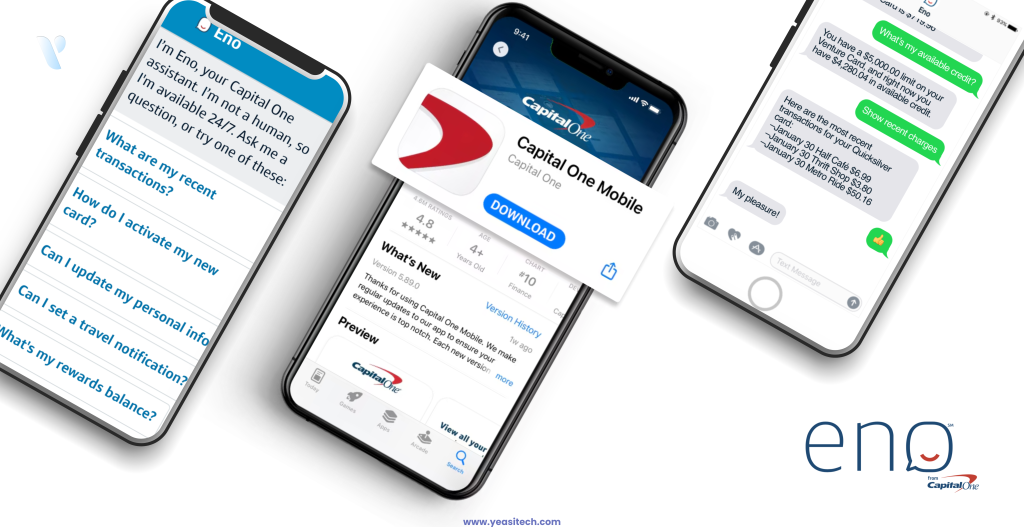
1. Eno by Capital One
Eno monitors transactions, alerts users to potential fraud, and generates virtual credit card numbers for safer online shopping. Its impact includes preventing thousands of fraud cases by identifying suspicious activity early. Eno provides real-time transaction updates and valuable account insights.
Result: Enhanced security and convenience for millions of Capital One users.

2. Cleo – The AI Money Coach
Cleo is a chatbot-based AI assistant designed to help users save money, budget more effectively, and even add a touch of humor by playfully roasting them for poor spending habits. Its smart savings feature has enabled users to save 30% more money, making financial management both efficient and engaging. Particularly popular among younger users, Cleo offers an interactive experience that not only improves financial literacy but also makes learning about money fun.
Result: Cleo makes banking more engaging, accessible, and rewarding for users.
Cost Breakdown of Developing AI Banking App
The following figures are derived from the expertise of our software developers in developing similar AI Banking apps:
Wrapping Up
AI-powered banking is revolutionizing the financial industry, making transactions smarter, security stronger, and customer experiences more personalized. As AI-driven solutions continue to evolve, banks and fintech companies must stay ahead by adopting the latest technologies and ensuring compliance with regulations. Whether you’re a developer, a banker, or simply interested in the future of finance, understanding AI in banking will open new opportunities for growth and innovation.

At YeasiTech, we specialize in building AI-driven banking solutions that enhance security, automate financial processes, and improve customer experiences.
Ready to develop your own AI banking app? Contact us today for expert guidance and bring your vision to life!
1. What is an AI banking app?
AI banking apps use artificial intelligence to provide personalized financial services, automate transactions, detect fraud, and improve customer support through chatbots and predictive analytics.
2. How secure are AI banking apps?
These apps use advanced encryption, biometric authentication, and AI-powered fraud detection to protect users’ data and prevent unauthorized access.
3. Can AI banking apps help me save money?
Yes! AI-powered apps analyze your spending habits, offer budgeting insights, and provide automated savings suggestions to help you manage your finances better.
4. Do AI banking apps replace human customer service?
While AI chatbots handle basic inquiries 24/7, human representatives are still available for complex issues, ensuring a balance between efficiency and personalized support.
5. Are AI banking apps free to use?
Many banks offer AI-powered features for free, but some advanced tools or premium services may require a subscription or a higher-tier account.