
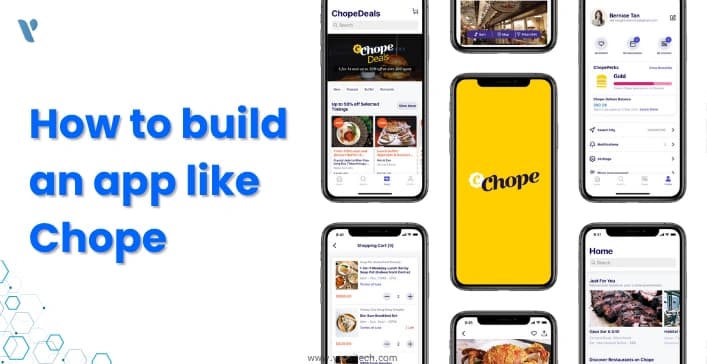
So you’ve got this amazing idea.
Maybe you’re scrolling through Chope for the hundredth time, watching people book tables in seconds, and thinking: “I could totally build something like this.” Or maybe you’re a restaurant owner tired of the endless phone calls and missed reservations. Perhaps you’re just someone who sees the massive opportunity in food-tech and wants in.
Whatever brought you here, you’re asking the million-dollar question, literally: How much does it actually cost to build an app like Chope?
Here’s the truth: it’s not a simple “$50,000, and you’re done” answer. But stick with me for the next few minutes, and I promise you’ll walk away knowing exactly what goes into building a restaurant reservation app, what each piece costs, where you can save money, and whether this dream of yours is actually doable.
Let’s dive in.
Table of Contents
- What Makes Chope So Special?
- What You’re Actually Building?
- The Restaurant Reservation Market: A Billion-Dollar Opportunity
- The Real Numbers: What Does This Actually Cost?
- Location Changes Everything: Where You Build Matters
- Feature-by-Feature: What You’re Really Paying For
- How to Keep Development Costs Under Control?
What Makes Chope So Special?
Before we start throwing numbers around, let’s get clear on what you’re actually building here.
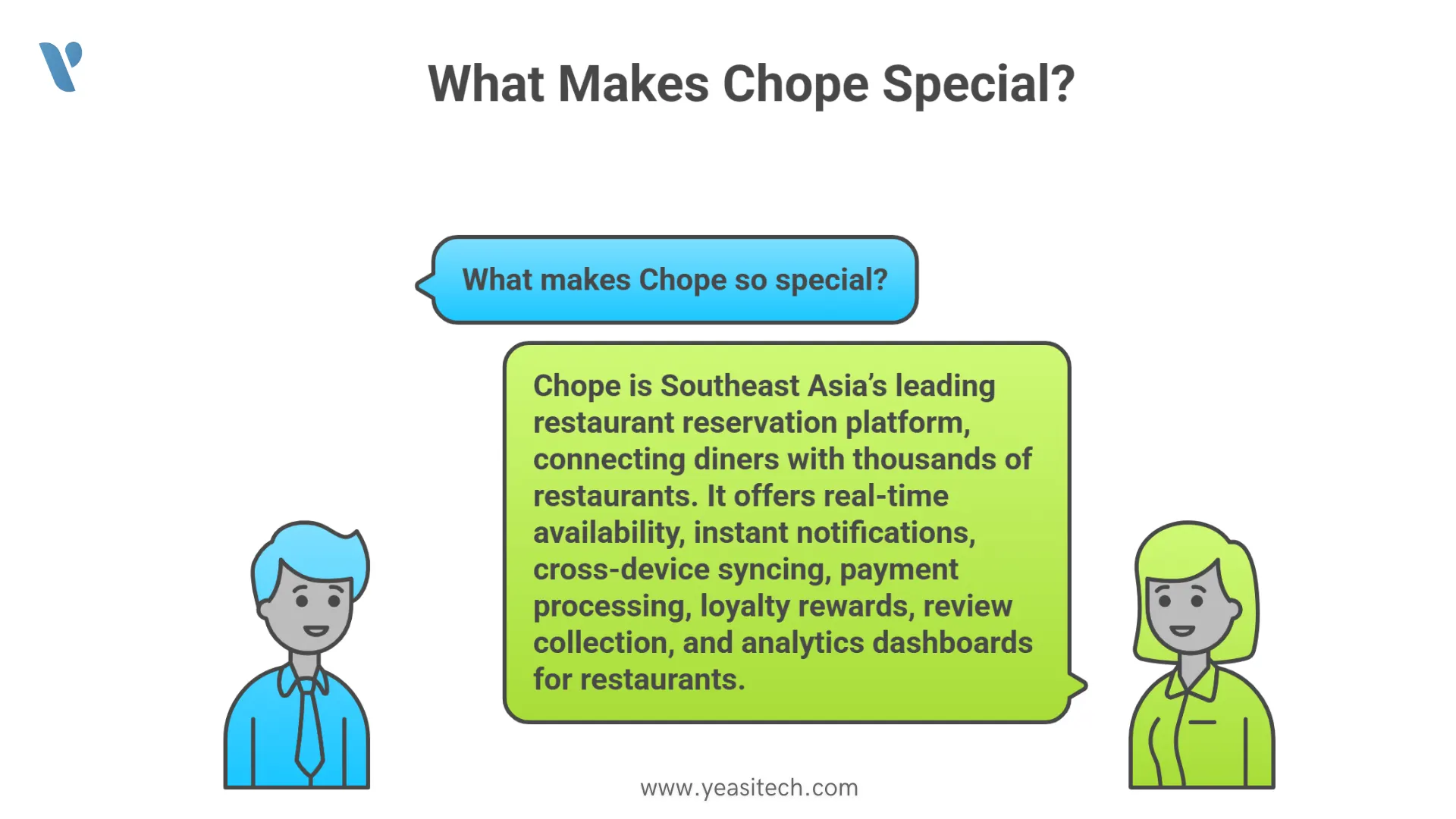
Chope isn’t just a simple booking form. It’s Southeast Asia’s leading restaurant reservation platform, connecting hungry diners with thousands of restaurants across Singapore, Hong Kong, Bangkok, and beyond. On the surface, it looks straightforward: search, pick a time, and book. Done. But underneath? There’s some seriously sophisticated technology making that seamless experience possible.
Think about what needs to happen for a single booking: the app needs to show you real-time availability so you’re not reserving an already-taken table. It needs to instantly notify the restaurant and send you a confirmation. It has to sync across multiple devices, handle payment processing for deposits, track loyalty rewards, collect reviews, and provide restaurants with analytics dashboards to understand their business better.
So when we talk about building an app “like Chope,” we’re talking about building a complete ecosystem that serves two completely different audiences: diners who want convenience and restaurants who need efficiency, and making both groups happy enough to keep using your platform.
What You’re Actually Building?
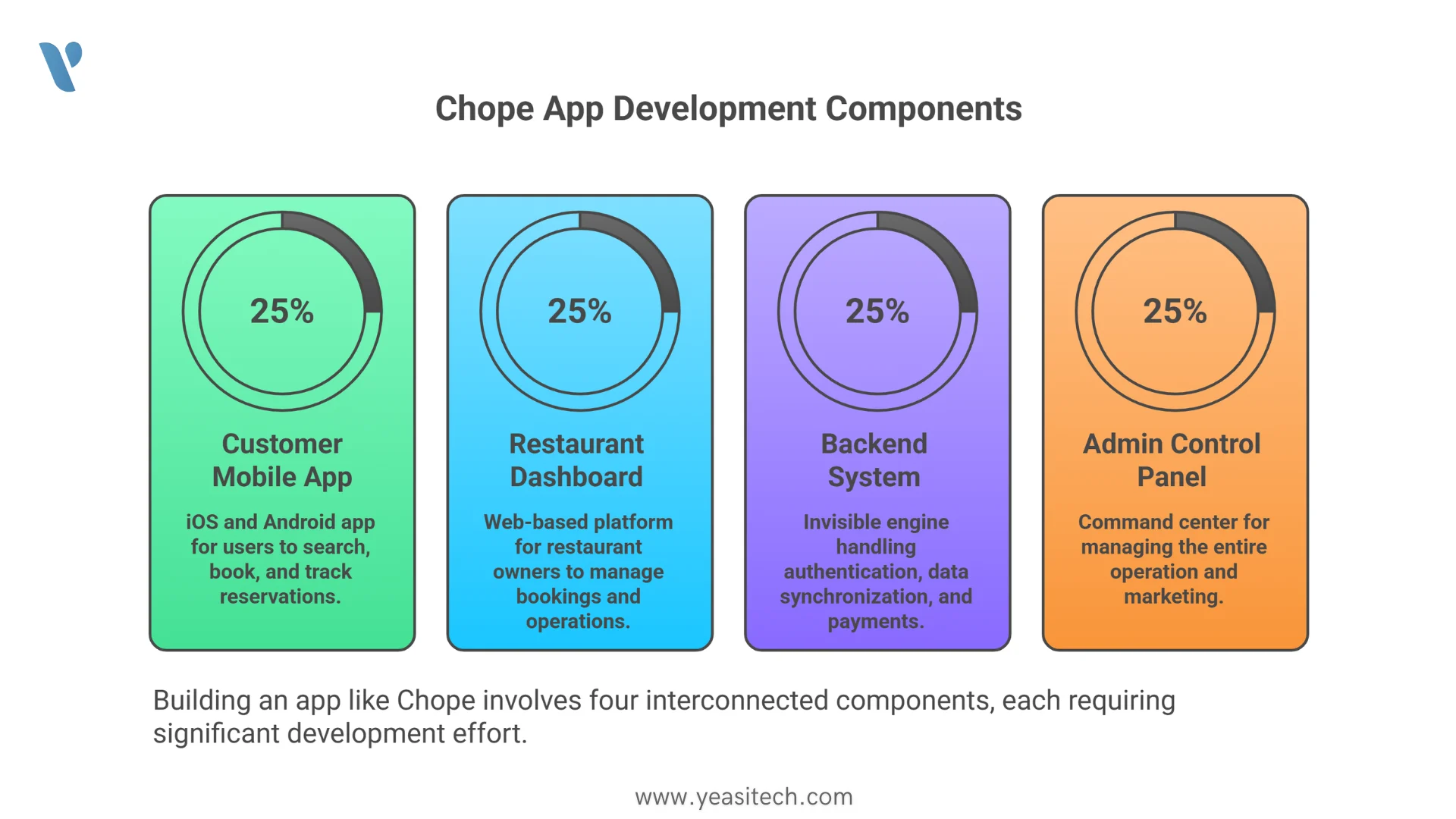
When you say “I want to build an app like Chope,” here’s what you’re really committing to:
1. The Customer Mobile App
The Customer Mobile App works flawlessly on both iPhones and Android phones. Users search restaurants by cuisine, location, or price range, scroll through photos, read reviews, see available times in real-time, and complete bookings in just a few taps. They track reservations, view dining history, and watch loyalty points accumulate.
2. The Restaurant Dashboard
The Restaurant Dashboard is a web-based command center where owners see all bookings at a glance, update table availability in real-time, manage waitlists, adjust menus, run promotions, and analyze customer data to make smarter business decisions about staffing and pricing.
3. The Backend System
The Backend System is the invisible engine handling user authentication, processing bookings, managing real-time data synchronization, storing information securely, sending notifications, and processing payments. When someone books at 3 PM, that slot immediately becomes unavailable for everyone else.
4. The Admin Control Panel
The Admin Control Panel is your command center for managing the entire operation—monitoring restaurants and users, handling support issues, processing payments and commissions, resolving disputes, and running marketing campaigns.
Each of these pieces requires serious development work, testing, and maintenance. Understanding this complexity is crucial because it directly impacts what you’re going to spend.
The Restaurant Reservation Market: A Billion-Dollar Opportunity
Before we dive into costs, let’s talk about why this opportunity is worth pursuing with real numbers.
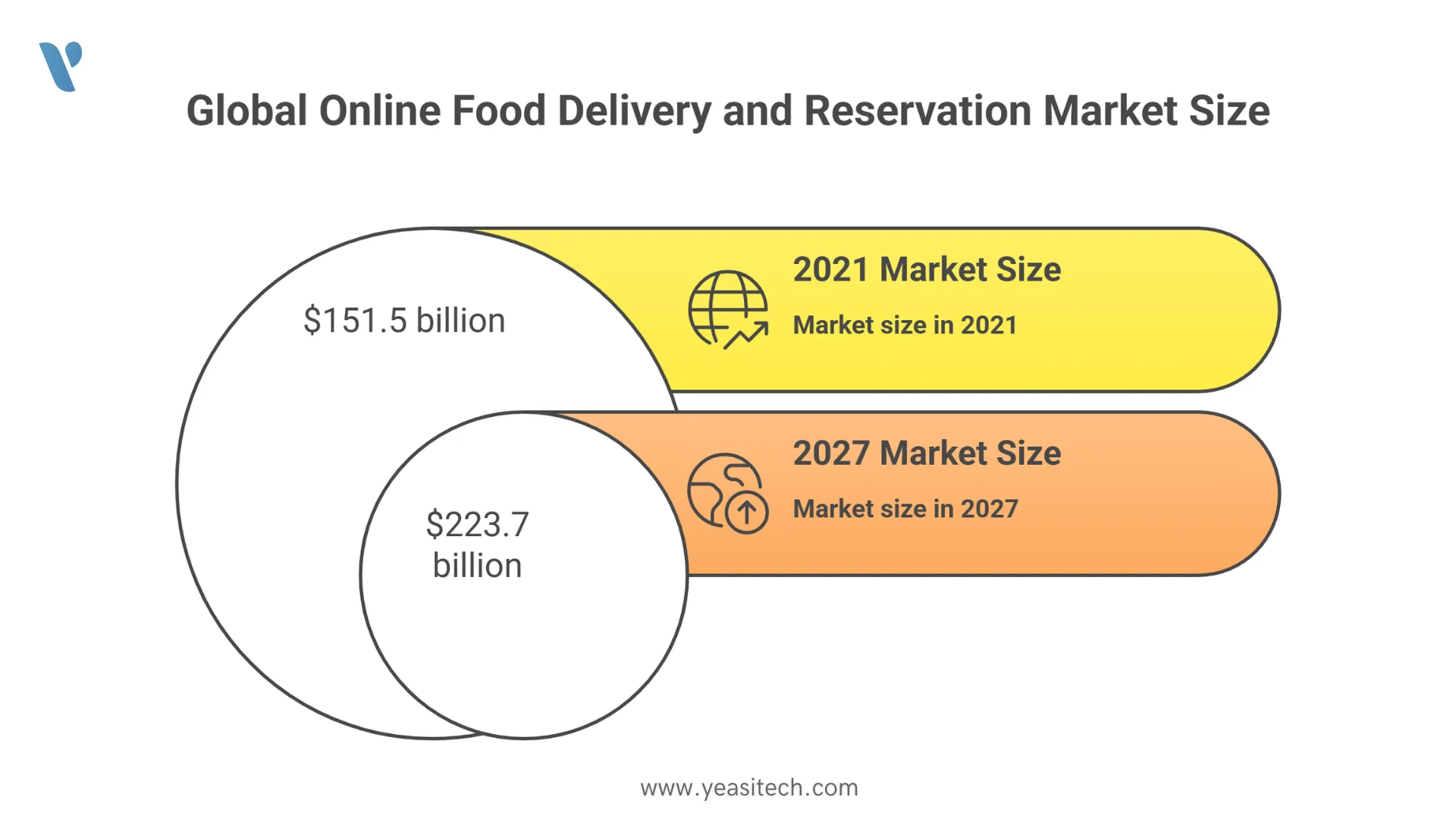
- Market Size & Growth: The global online food delivery and reservation market was valued at approximately $151.5 billion in 2021 and is projected to reach $223.7 billion by 2027, according to industry research reports. This represents steady growth even as the market matures, proving that digital restaurant solutions are here to stay.
- Consumer Preference Shift: Studies show that 70% of diners now research restaurants online before deciding where to eat, and 45% prefer booking tables through apps rather than calling. This behavioral shift is even more pronounced among younger demographics, with over 60% of millennials and Gen Z diners saying they’d choose a restaurant with easy online booking over one requiring a phone call.
- Transaction Volume Success: Established platforms demonstrate the scale possible in this market. OpenTable alone processes approximately 1.6 billion diners annually across its global network, while regional players like Chope have successfully carved out dominant positions in Southeast Asia by focusing on specific markets rather than trying to compete globally from day one.
The bottom line? You’re entering a growing market with proven business models, strong consumer demand, and room for innovation. The opportunity is real now. Let’s talk about what it costs to capture it.
The Real Numbers: What Does This Actually Cost?
Let’s talk money. Here’s exactly what you can expect at each investment level to develop an app like Chope:
Starting with an MVP is honestly where you should begin, even if you have more money available. You’re building the essential core that actually works and provides value. The brilliant thing about MVPs is that you can test your concept with real users and restaurants without betting your entire savings. Many successful startups proved their concept this way, showed traction to investors, and then raised money to build version 2.0.
Going full-featured means you’re adding everything that makes users love the experience: real-time updates, advanced search, loyalty rewards, payment processing, push notifications, reviews, and analytics. This is where your app stops, feels like an experiment, and starts feeling like a legitimate business.
Enterprise-level is for those with venture capital backing who want to out-innovate established players with AI recommendations, dynamic pricing, multi-country operations, and white-label solutions.
Location Changes Everything: Where You Build Matters
Here’s something surprising: where your development team is based can literally double or triple your costs. Let me show you:
The same platform that costs $30,000 in Western Europe might cost $10,000 in Asia. That’s a $20,000 difference, enough to cover your entire first-year marketing budget.
The smart approach? Many successful startups hire one senior technical lead locally for quality control, then have that person manage a development team in a lower-cost region. You get expertise where it matters most while keeping overall costs manageable.
At YeasiTech, we’ve helped numerous entrepreneurs navigate this balance, delivering professional, scalable platforms without the premium North American price tag. Our experience building marketplace and food-tech solutions means we understand which features actually drive success and which ones waste budget on things users ignore.
Feature-by-Feature: What You’re Really Paying For
Understanding exactly where your money goes helps you make smart decisions about what to build first when an app like Chope:
The “Essential” features are non-negotiable; you can’t have a reservation platform without user accounts, restaurant listings, booking systems, and dashboards. “High Priority” features like real-time availability and push notifications significantly improve user experience and reduce no-shows. “Medium Priority” features like payments and loyalty programs can often wait for version 2.0 after you’ve proven the concept works.
Here’s a smart approach: Start by building just the Essential features plus one or two high-priority items for your MVP. Launch quickly, get real user feedback, see which features people actually request, then prioritize based on actual demand rather than assumptions.
How to Keep Development Costs Under Control?
Building an app like Chope does not require funding at the enterprise level to deliver a competitive product. The decisions below consistently produce better outcomes per dollar spent.
- Start with a defined restaurant cohort, not a city-wide launch: Onboarding ten restaurants carefully, learning from their experience with the dashboard, and refining the booking flow based on real diner behaviour is more valuable than launching broadly with a product that has not been tested against actual restaurant workflows.
- Use cross-platform frameworks: Flutter and React Native cover both iOS and Android at 30 to 40% less than native development. The booking flow and restaurant dashboard do not have performance requirements that justify native development at MVP stage.
- Keep the restaurant dashboard focused at launch: The temptation is to build a comprehensive restaurant management tool from the start. A dashboard with booking view, real-time availability controls, and notification settings is sufficient to onboard and retain early restaurant partners. Additional tools can be added based on what restaurant operators actually request after going live.
- Defer AI features until you have data: Recommendation systems and predictive analytics require meaningful transaction history to generate useful outputs. Building them before the platform has an active user base results in features that do not work well and cost significant development budget to build. They are worth investing in once the data exists to power them.
- Invest in discovery before development begins: Two to three weeks of structured discovery covering restaurant workflow mapping, diner journey design, compliance gap identification, and payment architecture planning reliably prevents four to six weeks of expensive rework mid-build. The most common sources of cost overrun in apps like Chope are booking logic edge cases discovered during testing and compliance requirements identified after the architecture was already set.
How These Apps Like Chope Actually Make Money
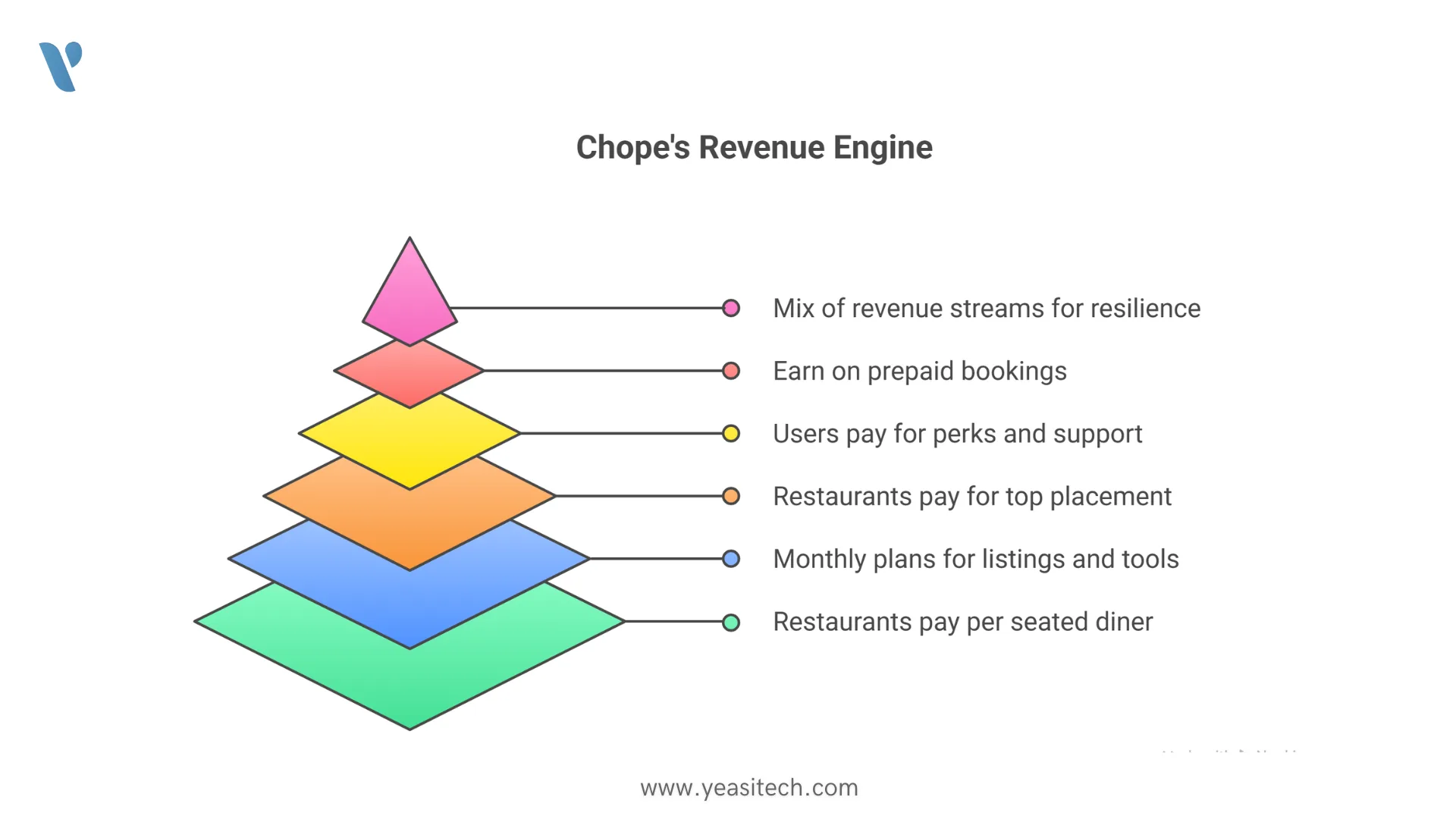
Making money in the restaurant reservation business isn’t about building a cool app;How These Apps Actually Make Money it’s about building a revenue engine. These platforms earn by combining commissions, subscriptions, ads, premium memberships, and transaction fees. Each model has its strengths, challenges, and technical requirements, and the most successful companies (like Chope and OpenTable) use a hybrid approach to maximize both volume and predictable recurring revenue.
How do These Apps Actually Make Money?
- Commission Per Diner: The most common model,restaurants pay $1–$2 per seated diner. Great for restaurants since they pay only for real customers, but you need a large booking volume to scale.
- Restaurant Subscriptions: Monthly plans (e.g., $99–$599) offering listings, analytics, marketing tools, and premium features. Creates predictable recurring revenue but requires convincing restaurants of long-term ROI.
- Advertising & Sponsored Listings: Once you have traffic, restaurants pay $500–$5,000/month for top placement, featured carousels, or email exposure, high-margin and infinitely scalable.
- Premium User Memberships: Users pay $9.99–$29.99/month for perks like priority seating, waived cancellation fees, exclusive events, or concierge support works best with strong brand trust.
- Transaction Fees on Prepaid Bookings: Earn 2–5% on deposits or full prepayments, which adds up fast for high-value reservations or special events.
- The Hybrid Model (What Winners Use): A smart mix commission as the core, subscriptions for stability, ads for extra revenue, and memberships/transaction fees for diversification and resilience.
Bottom Line: Your revenue model determines how your platform works, what features you build, and how you scale, so choose it early, design for it upfront, and use multiple streams to keep your business profitable and future-proof.
Conclusion
Building an app like Chope is more than cloning features; it’s about solving real problems efficiently. Start lean, validate your idea, and expand gradually.
With the right expertise and guidance, creating a Chope-like app becomes manageable and scalable. Experienced partners can help you navigate costs, tech choices, and post-launch operations effectively, so your app grows into a platform users can’t live without.
Ready to turn your super app vision into reality? At YeasiTech, we’ve helped dozens of founders build successful marketplaces and super apps. We specialize in cost-effective development without compromising quality, combining strategic planning with expert execution.
Whether you’re starting with an MVP or scaling to full super app status, let’s talk about building smart. Get in touch for a free consultation and detailed project estimate tailored to your vision.
Your super app journey starts with one smart decision. Make it today.
1. How much does it cost to build an app like Chope in Singapore?
A working MVP covering the diner app, restaurant dashboard, real-time booking backend, notification system, and admin panel typically runs SGD 92,000 to SGD 184,000. A full-featured platform with payment integration, reviews, loyalty, and analytics adds another SGD 46,000 to SGD 104,000. An enterprise-scale platform with AI recommendations, multi-market infrastructure, and white-label tools adds SGD 72,000 to SGD 160,000 on top. The right number for a specific project depends on scope, platform choice, and how much of the restaurant dashboard functionality is included from day one.
2. How long does it take to build a restaurant reservation app?
An MVP takes 5 to 9 months with an experienced team. A stripped-down version with a small initial restaurant cohort and no payment handling can be delivered in 4 to 5 months. A full-featured platform with payment integration, loyalty, analytics, and multi-language support takes 9 to 12 months. The real-time booking backend and restaurant dashboard consistently take longer than initial estimates because of booking logic edge cases and the iteration required to match actual restaurant workflows.
3. What is the most technically complex part of building an app like Chope?
The real-time availability engine. Managing concurrent booking requests against a finite set of available slots requires proper concurrency control in the backend. Without it, two users can successfully book the same table at the same time, a failure that is immediately visible to users and restaurants. This component requires WebSockets combined with database-level locking or Redis-based state management to work reliably under load.
4. What compliance requirements apply to a restaurant reservation app in Singapore?
PDPA applies to any platform collecting user data and requires explicit consent, data access and deletion rights, and breach notification procedures. The Payment Services Act applies if the platform processes payments or holds funds. Consumer Protection Act requirements cover pricing transparency and cancellation policies. GST at 9% applies to platform fees and commissions. Building these in from the start is considerably cheaper than retrofitting them later.
5. How do restaurant reservation apps make money?
The main revenue streams are commission per seated diner (USD 1 to 2 per booking that results in a visit), monthly restaurant subscription plans, sponsored listings and advertising for traffic-generating placements, premium diner memberships, and transaction fees on prepaid bookings. Most sustainable platforms use a combination of commission as the volume-driven base and subscriptions for recurring revenue, with advertising and premium features added as the platform reaches sufficient scale.
6. Do I need separate apps for diners and restaurant operators?
The diner app and the restaurant dashboard serve fundamentally different users with different workflows and different device contexts. Diners use a mobile app to discover and book. Restaurant staff use a web dashboard on a desktop or tablet to manage their booking schedule in real time. They can share a backend but should be separate products in terms of interface and design. Combining them produces a product that serves neither group well.
7. Can I build an app like Chope for a specific niche or city?
Yes, and this is often the right approach. Chope’s early growth came from deep market penetration in Singapore before expanding to other cities. A reservation platform built specifically for, say, fine dining in Singapore, halal restaurants in Malaysia, or brunch spots in Bangkok can serve those users and restaurant operators better than a generic platform trying to cover every category. Focused platforms can also build trust with restaurants faster because the product feels designed for their specific context.