
Improvements in technology are causing rapid changes in education. In 2025, new EdTech solutions are not only enriching our learning process but also increasing the effectiveness, accessibility, and customization of education. These innovations are resolving years of problems and will likely change the way educators, students, and educational institutions see education.
The global e-learning market is expected to reach over $460 billion by 2026. The industry is growing rapidly, with no signs of slowing down, as more people and organizations turn to EdTech for engaging, convenient, and effective education.
This blog post highlights a few of the most innovative EdTech projects that will impact education in 2025.
Table of Contents- What is Edtech?
- What is Edtech Solutions?
- The Current State of EdTech in 2025
- Traditional Classroom vs. EdTech Solutions
- Top 10 Benefits of Edtech Solutions in 2025
- Top 7 Innovative EdTech Solutions for 2025
- Overcoming Obstacles in EdTech Solutions
- Costing Table for EdTech Solutions in 2025
- Actionable Tips for Adopting EdTech Solutions
- Checklist for Successful EdTech Integration
- Wrapping Up
- FAQ’s
What is Edtech?
Edtech, or Educational Technology, uses digital tools like computers and software to improve teaching and learning, making education more effective and engaging. The term includes everything related to computer-based education, like online lessons, small learning modules, and social learning platforms led by communities.
What is Edtech Solutions?
Edtech solutions are apps and systems that use technology for better learning and teaching. These consist of interactive digital material, instructional software, virtual classrooms, and online learning platforms. Promoting student involvement, raising the efficacy of instruction, and making education more accessible to all subject areas and grade levels are the goals.
The Current State of EdTech in 2025
Statistics That Tell the Story:
- The global EdTech market is projected to reach $404 billion by the end of 2025, growing at a CAGR of 16.5% from 2021.
- Over 70% of students worldwide have used at least one online learning platform in the past year.
- Virtual Reality (VR) and Augmented Reality (AR) in education have seen a 48% adoption increase in K-12 schools and universities.
Fun Fact:
Over 90% of Gen Z students prefer digital textbooks over printed ones, primarily due to portability and integrated features like interactive quizzes.
Traditional Classroom vs. EdTech Solutions
Here’s a comparison of the traditional classroom setup and modern EdTech-driven solutions. This table highlights key differences in teaching methods, tools, and learning outcomes to help you understand how EdTech is transforming education:
Top 10 Benefits of Edtech Solutions in 2025
EdTech solutions are still developing in 2025 and provide a number of important benefits:
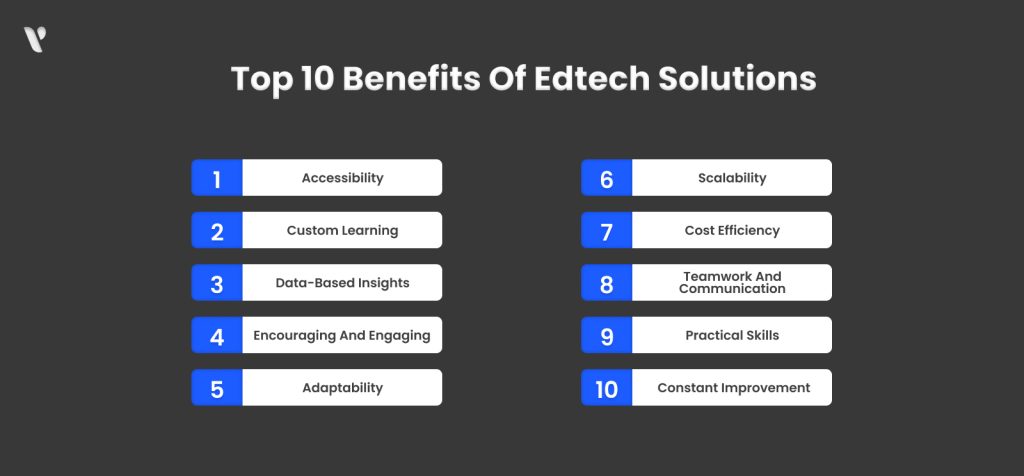
1. Accessibility
People from diverse backgrounds, especially those who live in distant or underprivileged locations, find learning to be simpler because of EdTech solutions. Economic and regional obstacles can be overcome with the use of Internet resources and platforms.
2. Custom Learning
By responding to each student’s needs, talents, and limitations, artificial intelligence (AI) and advanced algorithms create customized learning experiences. This supports a range of learning speeds and styles.
3. Data-Based Insights
Analytics technologies provide valuable insights into students’ performance and learning. With the use of this data, educators may identify areas in which pupils require help and plan lessons wisely.
4. Encouraging and Engaging
Learning may be made more interesting and pleasurable with the use of interactive technologies, gamification, and multimedia material, which will increase motivation and involvement.
5. Adaptability
Students may learn at their own speed and on their own time with the help of online and hybrid learning alternatives, which can be especially helpful for working adults or those with other obligations.
6. Scalability
EdTech solutions promote the scalability of educational programs and resources by reaching a high number of students at once, without requiring corresponding expansions in physical infrastructure.
7. Cost Efficiency
Many EdTech solutions can reduce the need for infrastructure and physical resources, making them more affordable than traditional teaching techniques.
8. Teamwork and Communication
A more connected learning environment is promoted by tools that let students and instructors communicate and collaborate, such as virtual classrooms, discussion boards, and collaboration software.
9. Practical Skills
Technology integration in the classroom contributes to the development of digital literacy and other 21st-century abilities that are essential in today’s work environment.
10. Constant Improvement
Technology is iterative, so tools and resources for education are always being updated and improved in response to user input and new trends.
Top 7 Innovative EdTech Solutions for 2025
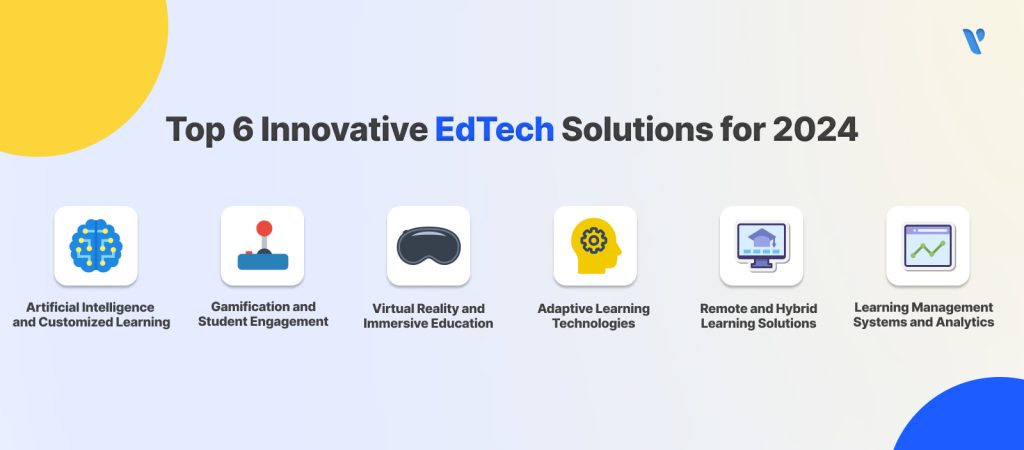
Edtech is an industry that is always changing. Numerous trends, such as the development of educational standards, the use of augmented and virtual reality in the classroom, AI-driven adaptive learning, and smart educational technologies, are all set to profoundly alter the educational landscape.
Given how quickly the digital era is developing, this is the ideal moment to investigate edtech trends in 2025 and what they mean for education:
1. AI-Powered Private Tutors: Customized Education
Imagine having a tutor available at all times who is aware of your learning preferences and can customize classes according to you. AI-powered tutors are more advanced than ever in 2025, which will make learning more efficient and effortless!
Popular Example
Khan Academy’s Khanmigo (USA) – Now used in over 200 countries, this AI tutor creates customized learning plans and helps students improve faster than traditional methods.
How It Helps:
- Adapts to your learning speed
- Gives instant feedback
- It makes studying less stressful and more fun
2. Gamified Learning – Studying Feels Like Playing a Game
What if learning felt like a video game? In 2025, apps use leaderboards, badges, and rewards to make studying fun and addictive.
Popular Example
Duolingo Max – The AI-powered version of Duolingo makes language learning more engaging with real-time conversation practice and interactive stories.
How It Helps:
- Makes studying fun instead of boring
- Encourages daily learning habits
- Great for learning new languages and skills
3. Virtual Reality (VR) – Learn by Seeing and Doing
Get rid of dull textbooks! By 2025, virtual reality headsets will enable kids to perform science experiments, explore space, and visit historical locations from the comfort of their own homes or classrooms.
Popular Example:
Meta’s Quest 3 for Education: Schools around the world use VR headsets for interactive lessons where students can explore the human body, and ancient civilizations, or even practice job skills.
How It Helps:
- Makes learning exciting and interactive
- Helps students remember information better
- Perfect for science, history, and skill training
4. AI Chatbots & Homework Helpers – Study Support Anytime
Ever needed help with homework late at night? In 2025, AI chatbots can explain math problems, suggest essay topics, and even help with coding in real time.
Popular Example:
ChatGPT-5 (by OpenAI) – This advanced AI tutor helps millions of students worldwide with homework, research, and language learning.
How It Helps:
- Instant answers to school questions
- Helps with essays, coding, and science
- Works in multiple languages
6. Learning Management Systems and Analytics
Learning Management Systems (LMS) are currently used by businesses, colleges, and schools to smoothly deliver online learning, organize courses, and monitor student progress.
Popular Example:
Google Classroom & Moodle – Used by millions of educators to assign homework, track grades, and communicate with students online.
How It Helps:
- Makes online learning & teaching easier
- Keeps all study materials organized in one place
- Helps teachers track student progress
7. Digital Diplomas & Blockchain – No More Lost Certificates!
Fed up with weeks of waiting for your diploma? By 2025, degrees and credentials will be digitally recorded, securely accessible, and guaranteed by blockchain technology.
Popular Example:
MIT’s Digital Diplomas (USA) – Students receive blockchain-based degrees that employers can verify instantly, reducing fraud and speeding up hiring.
How It Helps:
- No more fake degrees
- Instant verification for jobs & universities
- Easy to share with employers worldwide
8. Smart Classrooms – The Future of Schools
In 2025, classrooms will be dynamic and high-tech, with digital whiteboards, online collaboration tools, and AI-powered attendance.
Popular Example:
Microsoft Teams for Education – Now powered by AI-driven analytics, helping teachers track student progress and provide personalized learning.
How It Helps:
- Hybrid & remote learning is now seamless
- Teachers can track student progress easily
- Students learn more efficiently with AI insights
Overcoming Obstacles in EdTech Solutions
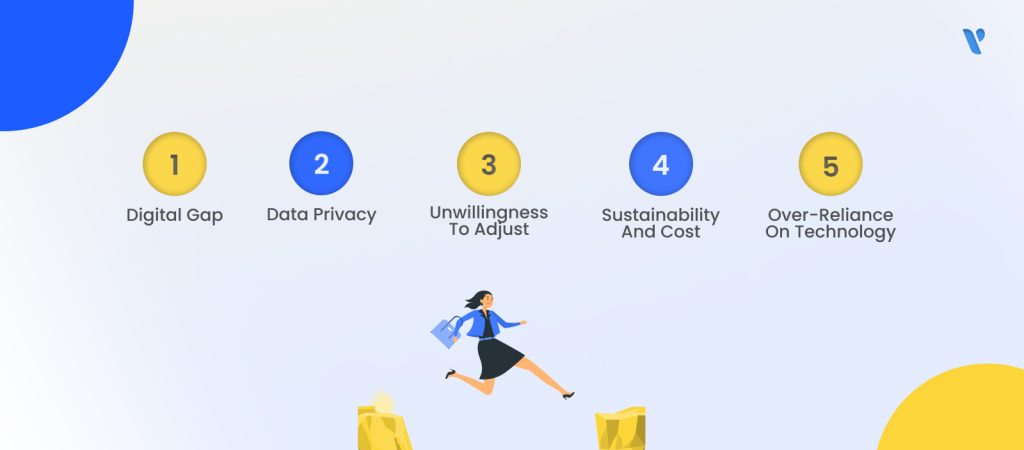
The following are some of the major obstacles encountered in EdTech Solutions and how to overcome them :
1. Digital Gap
The technological gap is one of the main issues. Not every person has equal access to technology. It’s common for students in low-income or remote areas to lack access to dependable internet and modern technology. This gap may increase educational disparities and hamper the equitable adoption of EdTech by all students.
2. Data Privacy
The growing use of digital devices demands the protection of sensitive data. EdTech platforms frequently gather personal data, which if poorly protected might be breached. For schools and parents, protecting the security and privacy of student data is a top priority.
3. Unwillingness to Adjust
Due to unfamiliarity or concerns about altering their standard teaching techniques, teachers and educational institutions may be reluctant to adopt new technology. Even though EdTech has the potential to improve learning outcomes, this resistance can make its implementation challenging.
4. Sustainability and Cost
It can be costly to implement EdTech solutions, especially for underfunded institutions. Another level of complexity is added by the sustainability of these technologies, which takes training, upgrades, and maintenance into account.
5. Over-Reliance on Technology
Technology can benefit education, but if we rely too heavily on it, we risk neglecting essential abilities like social interaction and critical thinking. To support students’ complete growth, conventional teaching techniques and EdTech use must be balanced.
Discover how YeaiTech transforms EdTech Solutions with innovative solutions—explore our success stories here:
Costing Table for EdTech Solutions in 2025
Here’s a guide to approximate pricing for EdTech tools in 2025. Costs can vary depending on features, user base, and licensing models. This table outlines typical pricing models and examples for different types of EdTech solutions. The following figures are derived from the expertise of our software developers in developing similar apps:
Please get in touch with our team if you would like a customized app idea estimate. Our team will assess your needs as a business and as a product before presenting an elaborate cost estimate.
Actionable Tips for Adopting EdTech Solutions
1. For Educators
- Start small by integrating one tool (e.g., a gamified quiz platform) into your lessons.
- Leverage analytics to identify areas where students struggle and tailor your approach.
- Take professional development courses to stay updated on EdTech trends.
2. For Institutions
- Pilot new tools with a small group of students before full-scale implementation.
- Partner with trusted EdTech providers for long-term support and sustainability.
- Ensure cybersecurity measures to protect student data.
3. For Students
- Explore free trials of learning platforms to find what works best for your style.
- Set specific goals when using EdTech tools to stay focused and measure progress.
- Use collaboration features to enhance teamwork and communication skills.
Checklist for Successful EdTech Integration
- Identify key educational challenges you want to address (e.g., engagement, accessibility).
- Research and choose platforms that align with your goals and audience.
- Train educators and staff on how to use the selected EdTech tools effectively.
- Pilot the solution with a small group and collect feedback for improvements.
- Establish cybersecurity protocols to safeguard user data.
- Monitor and evaluate the solution’s impact on learning outcomes regularly.
- Stay informed on updates and upgrades to maximize the tool’s potential.
Wrapping Up
Imagine a future in which artificial intelligence (AI) recognizes your advantages and disadvantages, customizes your learning path, and offers personalized assistance at every stage. With YeasiTech, this future is now a reality for educators and students, not simply a distant dream.
We are your AI-enabled learning partner, dedicated to enabling both teachers and students. Our modern AI platform demonstrates the benefits of specific criticism, ongoing development, and personalized learning along with providing on-demand resources.

FAQ’s
1. What are EdTech solutions?
EdTech solutions are digital tools and technologies that help improve teaching and learning. These include software, apps, online platforms, and other resources used for education.
2. How can EdTech benefit students?
Customized learning experiences, more interactive material to interest viewers, easier access to a greater variety of resources, and support for different learning styles are all possible with EdTech.
3. How can AI improve the educational experience?
By automating administrative processes, delivering real-time feedback, and customizing instruction, AI enriches education. It records progress, customizes information to each student’s requirements, and recommends resources to support them in achieving their objectives.
4. What Are the Key Trends in EdTech?
Popular trends include AI-driven learning, virtual and augmented reality (VR/AR), gamification, blockchain for certification, and adaptive learning powered by big data analytics.
5. How Can Schools and Businesses Implement EdTech Solutions?
Institutions can integrate EdTech through LMS platforms, e-learning content, mobile apps, and collaboration tools. Choosing scalable, user-friendly solutions with strong support is essential for successful implementation.
6. What Are the Challenges of EdTech Adoption?
Common challenges include digital divide issues, teacher training, high initial costs, and data security concerns. Ensuring accessibility, affordability, and robust IT infrastructure is crucial for effective adoption.
7. Is EdTech suitable for all ages?
Yes, from preschool to professional training, EdTech supports learners of all levels.
8. How does EdTech improve engagement?
Gamification, multimedia content, and interactive lessons make learning more engaging and effective.
9. What is the future of EdTech?
The future includes AI-driven learning, immersive VR/AR education, blockchain for certifications, and adaptive learning platforms.