

The way businesses hire and scale teams has undergone a remarkable transformation. In 2025, hiring dedicated resources, specialized professionals committed exclusively to your projects, has become a mainstream strategy across industries.
Why the shift? Because companies need agility, speed, and expertise without the high overhead costs of traditional hiring. This guide will help you understand everything about hiring dedicated resources, from benefits and trends to costs and future outlook.
But what exactly does it mean to hire dedicated resources? Why is it so crucial today, and how can your business leverage it successfully?
This guide will explain the why, how, costs, trends, and future outlook of hiring dedicated resources.
“Talent is the multiplier. The more energy and attention you invest in it, the greater the yield.”- Marcus Buckingham
Table of Contents
- What Does Hiring Dedicated Resources Mean?
- Why It’s Becoming a Strategic Move in 2025?
- Key Trends Shaping Demand in 2025
- Why Do Companies Hire Dedicated Resources?
- How to Hire Dedicated Resources: A Step-by-Step Guide
- Dedicated Resources vs Freelancers vs In-House Teams
- Cost Breakdown: Hiring Dedicated Resources Onshore vs Offshore
- The Future of Hiring Dedicated Resources: AI, Automation, and Beyond
- Conclusion: Why Now Is the Right Time to Hire Dedicated Resources
- FAQS
What Does Hiring Dedicated Resources Mean?
Let’s break it down in simple terms:
Hiring dedicated resources means bringing professionals or entire teams on board to work exclusively on your project, but without officially adding them to your company payroll. They can be remote or offshore, managed directly by you or through a third-party partner.
Unlike freelancers (who might juggle multiple clients) or traditional employees (who come with long-term obligations), dedicated resources are 100% committed to your work for a set period be it 3 months, a year, or ongoing.
Think of it like this:
- You get top-tier talent
- You control the workflow
- You skip the HR headaches
Why It’s Becoming a Strategic Move in 2025?
The world of work has changed dramatically. The pandemic accelerated remote work. AI is reshaping job roles. Budgets are tighter. Speed is everything. In this chaos, companies are realizing that hiring dedicated resources is:
- Agile: Need to scale up or down? No problem.
- Cost-effective: Pay only for what you need.
- Global: Access world-class talent from anywhere.
- Focused: These professionals are aligned solely with your goals.
According to Deloitte’s Global Human Capital Trends 2025, over 65% of executives said they’re investing more in flexible workforce models this year, with dedicated teams topping the list.
“Companies are moving from static work models to dynamic ecosystems,” says Erica Volini, Global Human Capital Leader at Deloitte.
Key Trends Shaping Demand in 2025
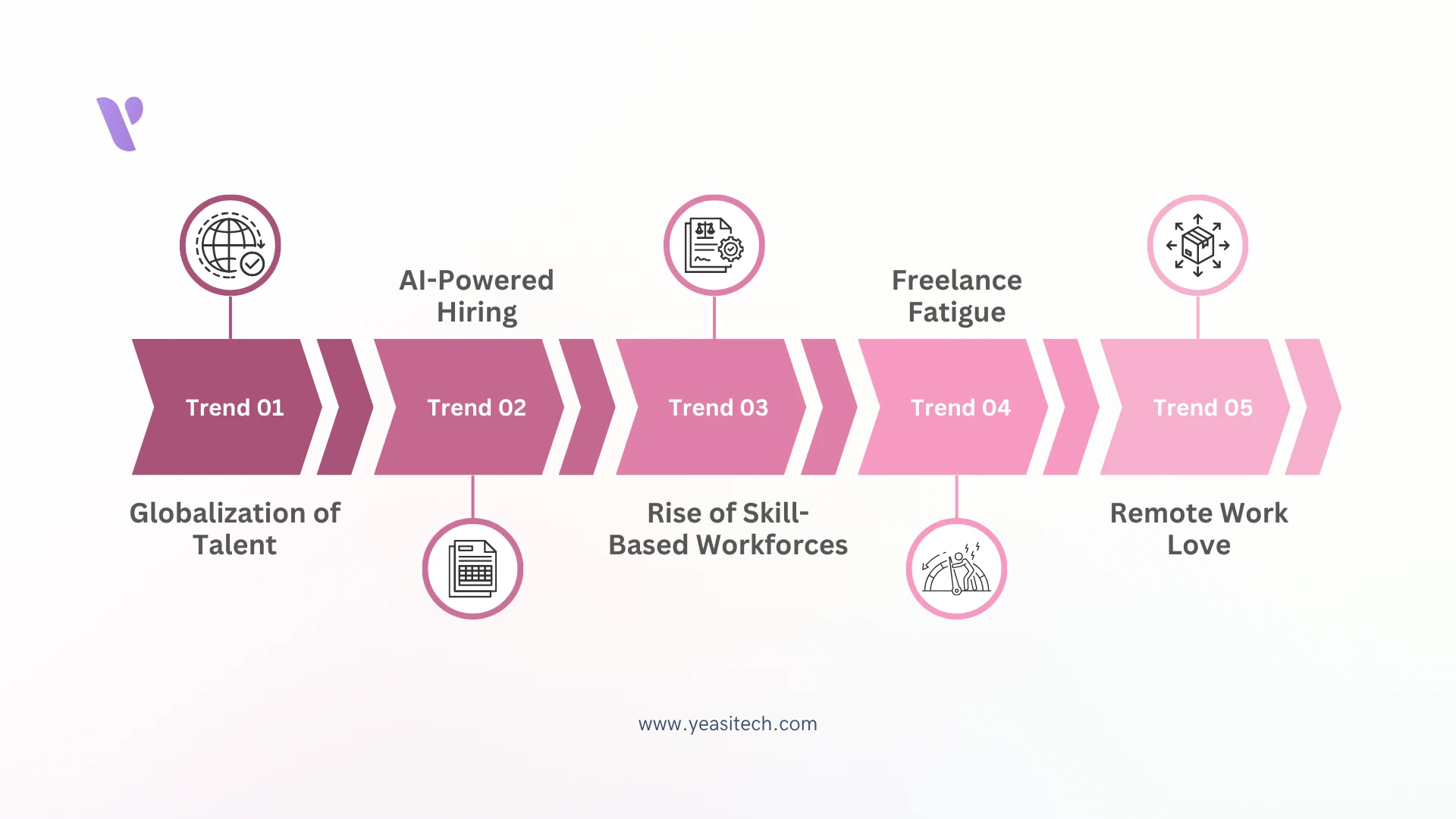
Several megatrends are fueling the demand for dedicated resource models in 2025:
1. The Globalization of Talent
A Gartner report from 2024 states that more than 75% of companies currently employ some kind of international talent acquisition. Employers no longer compete for local talent; instead, they seek out the most competent workers.
2. AI-Powered Hiring
AI is shortening hiring cycles by automating candidate matching. Platforms like YeasiTech, Turing, Toptal, and RemoteOK use machine learning to suggest top talent within 48 hours.
3. Rise of Skill-Based Workforces
Credentials are out. Skills are king. Businesses are moving from degree-based hiring to skill verification. 61% of HR leaders now prioritize hands-on experience and problem-solving ability over formal education (LinkedIn Workplace Report, 2025).
4. Freelance Fatigue
Freelancers are great, but only sometimes. As companies seek continuity and long-term collaboration, dedicated teams offer a better balance between flexibility and stability.
5. Remote-First Is Now Default
According to Exploding Topics of Remote Work 2025, 92% of companies allow remote work, and 68% are entirely remote or hybrid. This makes dedicated remote resources a seamless cultural fit.
Why Do Companies Hire Dedicated Resources?
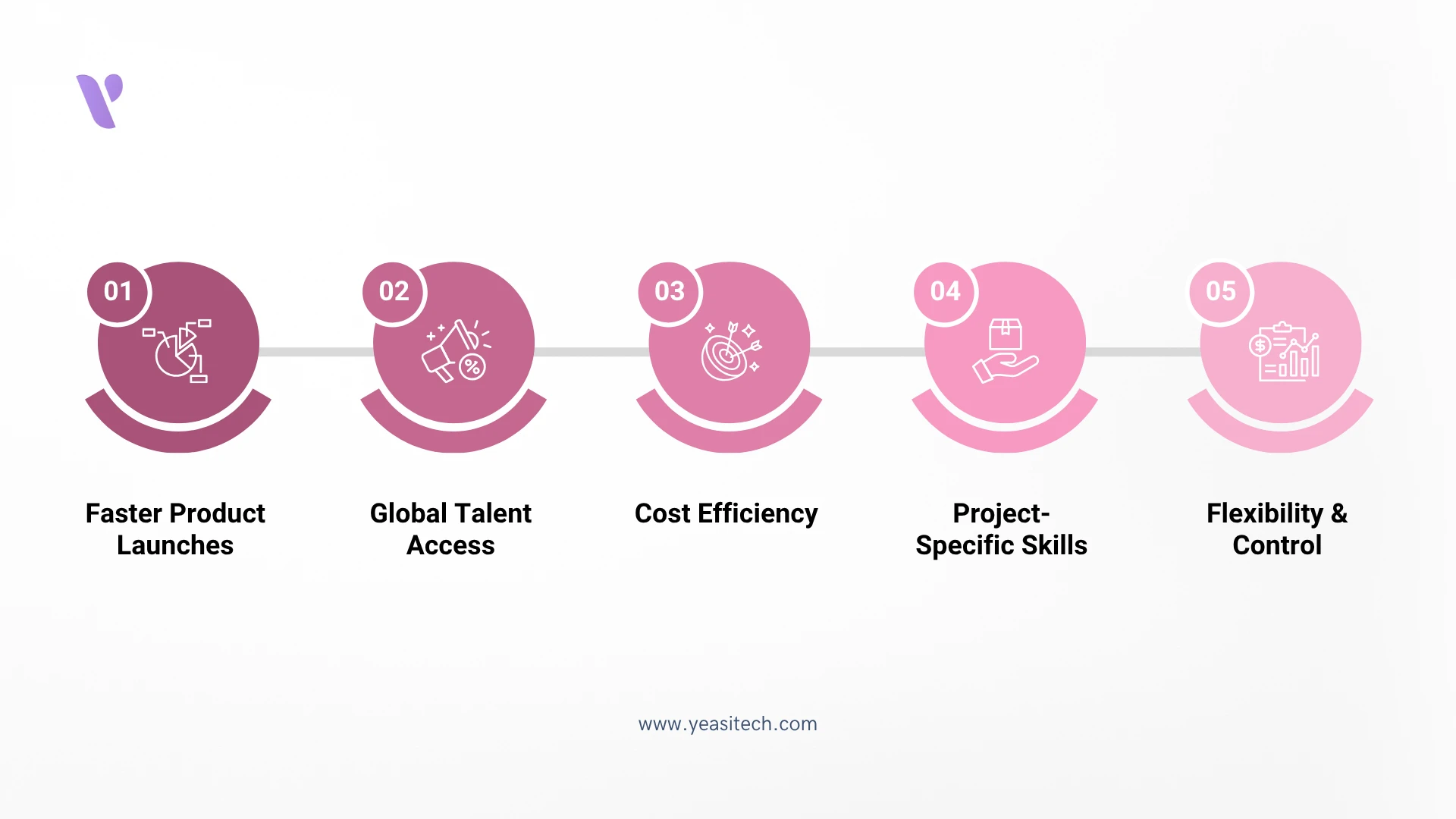
From startups to Fortune 500s, companies are leaning into this model. But why?
1. Faster Product Launches
You don’t have to spend 3–6 months hiring a full team. Vendors already have pre-vetted developers, designers, testers, and analysts.
2. Global Talent Access
Need an iOS developer in Eastern Europe or a cybersecurity expert in India? No problem. You can find high-quality experts at nearly every time zone.
3. Cost Efficiency
Hiring a senior app developer in the U.S. may cost $150/hr. Offshore? Just $30–50/hr with the same or better quality. That’s a 66%+ savings.
4. Project-Specific Skills
You get only what you need, no long-term salary commitments, no idle time.
5. Flexibility & Control
Unlike freelancers, dedicated resources work full-time with you, follow your processes, attend your meetings, and deliver your KPIs.
How to Hire Dedicated Resources: A Step-by-Step Guide
Let’s get practical. Here’s how you can actually go about hiring your own dedicated team:
Step1: Identify Your Needs
Start with the basics:
- What is your project about?
- What skills do you need? (E.g., React Native developer, QA tester, UI/UX designer)
- How long will the project last?
- What’s your budget?
Step2: Choose the Right Engagement Model
You have three main models:
- Individual Resources (e.g., one developer or designer)
- Dedicated Team (a complete team with PM, devs, QA, etc.)
- Managed Services (where the vendor manages delivery)
Step3: Find the Right Vendor or Platform
Look for providers with:
- A good portfolio
- Verified client reviews
- Transparent pricing
Top platforms include:
- Toptal
- Upwork Talent Cloud
- YeasiTech (for vetted offshore software teams)
Step4: Screen and Interview Candidates
Assess their:
- Technical skills (via tests or live coding)
- Communication skills
- Work samples
- Cultural fit
Step5: Define Contracts & KPIs
Set clear expectations:
- Hours per week
- Deliverables and milestones
- Reporting structure
- IP and confidentiality clauses
Step6: Onboard and Manage
Use tools like:
- Slack or Teams for communication
- Jira, Trello, or ClickUp for task tracking
- Zoom for regular check-ins
Dedicated Resources vs Freelancers vs In-House Teams
Here’s a practical breakdown:
Cost Breakdown: Hiring Dedicated Resources Onshore vs Offshore
Here’s what businesses are typically paying in 2025 for hiring dedicated talent:
Key Insight: Offshore resources can save up to 70% in cost, making it ideal for startups and mid-sized firms aiming for faster ROI.
The Future of Hiring Dedicated Resources: AI, Automation, and Beyond
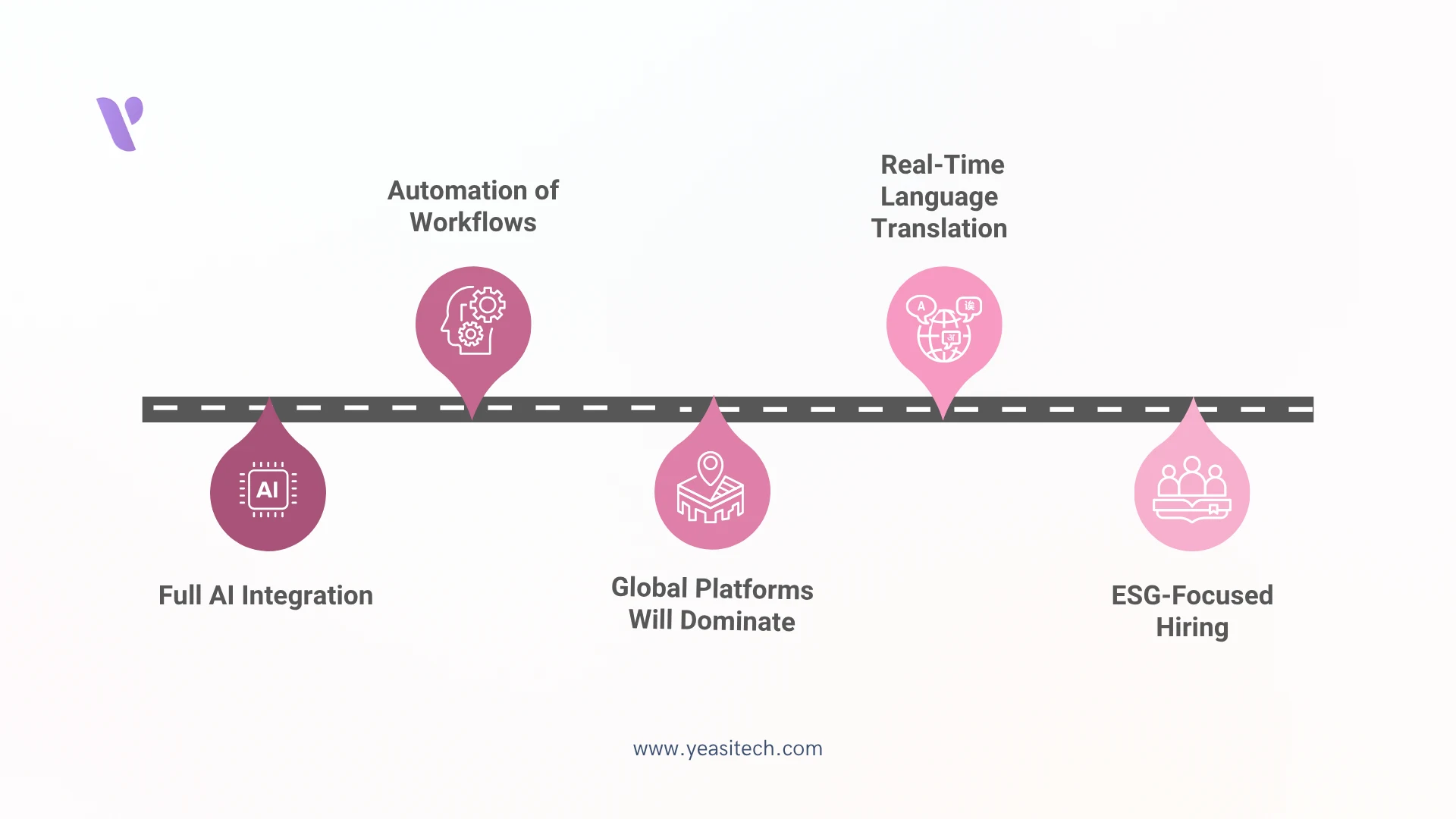
As tech evolves, so will hiring. Here’s what the future holds:
1. AI in Hiring
AI will:
- Match candidates to roles using deep learning
- Predict job success
- Automate onboarding
Stat: By 2027, 40% of all recruitment tasks will be automated. (PwC Future of Work 2025 Report)
2. Automation of Workflows
From coding assistants to test automation, AI will empower dedicated teams to work faster and smarter.
3. Global Platforms Will Dominate
Marketplaces like YeasiTech, Andela, and Toptal will build “talent clouds”, letting companies tap into verified experts instantly.
4. Real-Time Language Translation
Thanks to tools like DeepL and GPT-powered translators, language barriers will disappear in global teams.
5. ESG-Focused Hiring
Businesses will seek teams that align with environmental, social, and governance (ESG) goals. Diversity and sustainability will matter more than ever.
Conclusion: Why Now Is the Right Time to Hire Dedicated Resources
In 2025, business agility, access to specialized talent, and cost-effectiveness are non-negotiables. Hiring dedicated resources offers all three and more.
Whether you need a solo developer or an entire offshore product team, choosing the right partner like YeasiTech can be the difference between project success and frustration.
So ask yourself:
- Do you want faster delivery?
- Do you want access to global experts?
- Do you want flexibility without overhead?
If the answer is “Yes,” the dedicated hiring model is made for you.
With 10+ years of experience, a network of certified developers, designers, and QA professionals, and a global delivery footprint, YeasiTech is your trusted partner in building high-performing, scalable teams.
“We don’t just deliver talent. We deliver outcomes.”- YeasiTech Team

FAQS
1. What are the key benefits of hiring dedicated resources in 2025?
The main benefits include cost-effectiveness, access to global talent, faster time-to-market, scalability, and 24/7 support especially when outsourcing to offshore teams.
2. How is hiring dedicated resources different from freelancers or in-house teams?
Dedicated resources work solely for your company like an in-house team, but are employed by a third-party vendor. Unlike freelancers, they provide long-term commitment, better collaboration, and more control, without the cost and logistics of in-house hiring.
3. What industries benefit the most from hiring dedicated resources?
In 2025, industries like IT, fintech, healthcare, eCommerce, and real estate are leveraging dedicated resources the most for software development, product design, cloud management, and tech support.
4. How much does it cost to hire dedicated resources in 2025?
Costs vary by region and expertise. On average, offshore developers (e.g., from India or Eastern Europe) cost $20–$50/hour, while onshore resources (e.g., in the U.S. or UK) can cost $75–$150/hour. Long-term contracts often reduce the average rate.
5. What does “hiring dedicated resources” mean in 2025?
Hiring dedicated resources refers to hiring full-time professionals or teams from an external service provider who work exclusively on your project or business needs. In 2025, this model will be widely used for accessing specialized talent, reducing overhead costs, and increasing project efficiency.