
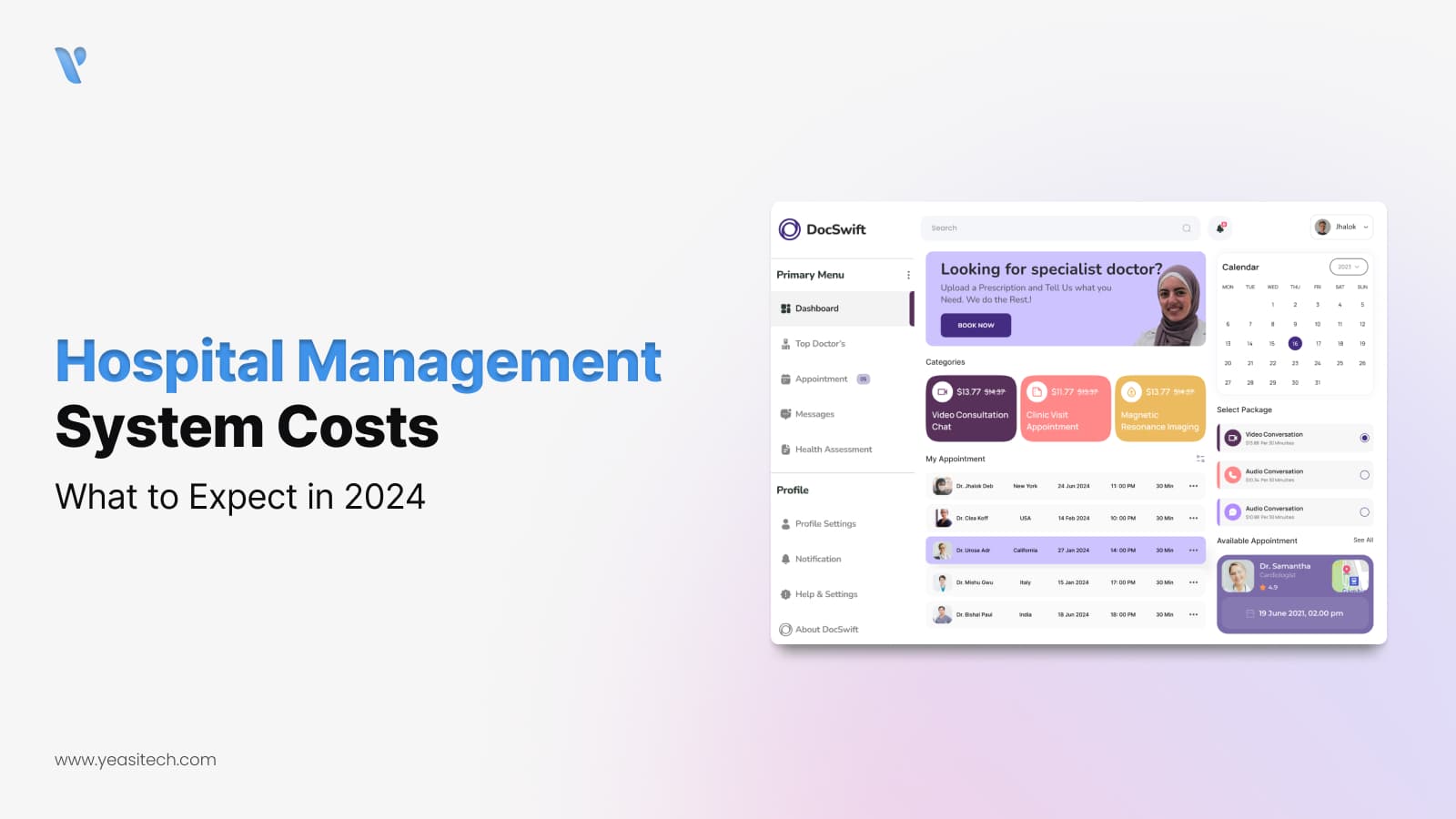
Developing a Hospital Management System (HMS) involves various factors that affect the total cost. The scale and complexity of the project can significantly impact the cost. This article explores all aspects of HMS costs, providing an in-depth analysis of expenses, cost-saving strategies, and the average software cost. To find out more, continue reading.
According to Statista, the market for health management systems is anticipated to reach a value of over 50 billion dollars by 2025. Health organizations are spending more money on custom software development to promote patient satisfaction, improve workflow, and increase the effectiveness of care delivery. But how do you create hospital management software? What features should custom software include, and is it worth it? Let’s take a closer look at HMS, covering its features, design, development process, and cost.
Table of Contents
- What Is Hospital Management System Software?
- Hospital Management Systems’ Essential Features
- 10 Key Factors Affecting Hospital Software Development Costs
- Types of Hospital Management System Software
- Steps to Develop Hospital Management System Software
- Real-Life Case Studies
- Hospital Management Software Development Costs Breakdown
- Tips for Saving on Hospital Management System Development
- Checklist for Hospital Management System Development
What Is Hospital Management System Software?
Software that can be cloud-based or standalone is known as a hospital management system. It gathers and arranges all the information required to oversee hospital operations both within and outside the building. Information about physicians, patients, lab results, medical supplies, appointments, insurance, billing, and reports are all included in this. An HMS’s primary objectives are to reduce administrative expenses, decrease workload, minimize errors, boost productivity, and enhance patient satisfaction.
With an HMS, you can automate the majority of everyday chores, organize all data in one place, and manage every part of a healthcare facility’s workflow—all of which effectively eliminates the need for paper-based processes. The capacity of hospital management systems to be adaptable and modular while integrating with many platforms and technologies is one of their primary features.
Hospital Management Systems’ Essential Features
The Hospital Management System (HMS) uses technology to simplify hospital operations and improve patient care. Patients, doctors, and administrators benefit from task simplification, including appointment scheduling, record management, and resource allocation. Below is a table of essential HMS features grouped by focus: patient, doctor, and admin.
10 Key Factors Affecting Hospital Software Development Costs
Several factors influence the cost of developing hospital management software systems, especially with the increasing shift toward digital healthcare. Here are some important ones:
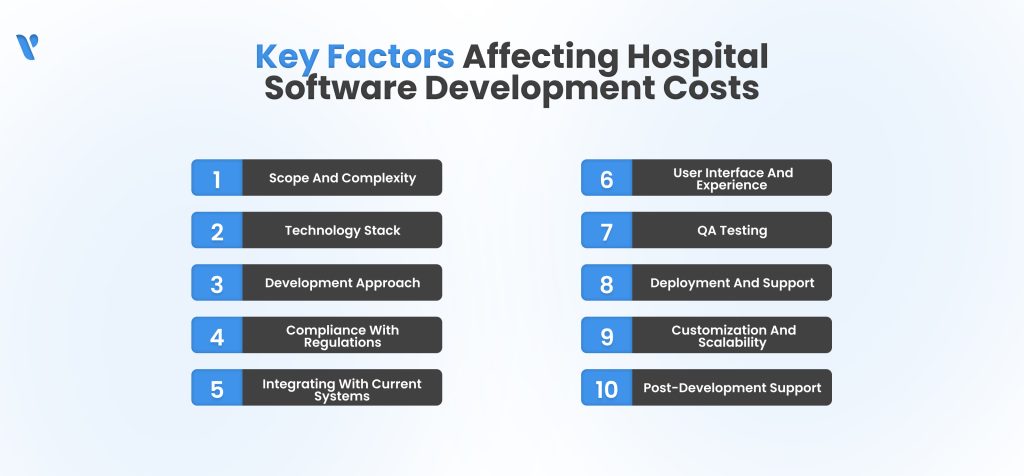
1. Scope and Complexity of the Project
The cost of the hospital management software system is mostly determined by its features and size. HMS with complex features such as inventory control, patient administration, and invoicing would cost more than a basic Electronic Health Record (EHR) system.
2. Technology Stack
Choosing the right technological stack, which consists of databases, frameworks, and programming languages, may have an effect on development costs. More modern and advanced tools may be more expensive at first, but they may provide better scalability and lower maintenance costs over time.
3. Development Approach
Whether you decide to hire a professional team, build software internally, or use a combination of the two will affect the final cost. While outsourcing to regions with cheaper labour costs may result in financial savings, there may be extra project difficulties.
4. Compliance with Regulations
Hospital management software needs to follow regulations and standards like HIPAA, ACHC, and GHA. Making sure it meets these requirements can be expensive during development.
5. Integrating with Current Systems
Patients, doctors, and administrators benefit from task simplification, including appointment scheduling, record management, and resource allocation. Obsolete systems can increase development expenses because incorporating new software requires a lot of effort and time.
6. User Interface and Experience Design
User interface (UI) and user experience (UX) design are critical components of software success. Superior UI/UX design increases satisfaction with the product but often increases development costs, particularly if extensive user testing and iteration are required.
7. Testing and Quality Assurance
Thorough testing and quality checks are essential for healthcare software. This can increase costs, as the software needs to be tested to fix any bugs and meet all requirements.
8. Deployment and Support
Other elements that raise the overall cost contribution include software implementation and maintaining the support system. Staff training, which includes technical support and software introduction, is a continuous expense.
9. Customization and Scalability
If software has to be readily scalable or more configurable to allow for the inclusion of new features, costs for development may increase.
10. Post-Development Support
Hospital software systems require ongoing maintenance and support. The total cost increases when long-term upgrades, bug patches, and new feature development are budgeted for.
Want to read more about Healthcare Software? You can check our blogs below:
- Custom Hospital Management System for Enterprises in 2025
- Tips to Build Custom Patient Data Management System Development in 2025
- Custom Healthcare Software Development: Guide and BenefitsCost of Building a Healthcare App Like Practo: Features and Benefits in 2025
Types of Hospital Management System Software
Different healthcare facilities have different hospital management systems. The system you choose will rely on your goals since it is made up of numerous modules, each with a unique function that can be customized to satisfy a particular requirement. There are a few primary varieties, though, that are often more prevalent.
- Billing and Financial Management Systems: Financial reporting, billing, and claim processing are handled by them. Through the verification of accurate invoices and simplifying of insurance claims, they help hospitals manage their finances more effectively.
- Electronic Health Record Systems: Digital patient information systems make it easier to access and more accurate. They facilitate effective patient history, treatment, and test result tracking.
- Radiology Information Systems: Imaging workflows and data, including scheduling, reporting, and archiving, are managed using RIS. Through the organization of imaging examinations and associated data, they increase the efficiency of radiology departments.
- Laboratory Information Management Systems: LIMS improves data accuracy, tracks lab test results, and manages workflows. They work together with EHRs to facilitate smooth information exchange.
- Patient Management Systems: These manage patient flow, appointment scheduling, and check-ins, improving patient satisfaction and operational efficiency.
- Pharmacy Management Systems: Pharmacists monitor the ordering, stocking, and dispensing of medications. They help prevent mistakes and ensure patients receive their prescriptions promptly.
- Operating Room Management: The surgical team schedules and monitors surgeries, manages operating room availability, and coordinates staff and equipment for procedures.
- Equipment Management: Hospital staff track hospital equipment usage, maintenance schedules, and availability to ensure uninterrupted operations and optimize resource utilization.
- Pathology Laboratory: The team simplifies sample collection, testing, and reporting processes to ensure accurate results are delivered promptly for diagnoses.
- Ambulance Management: Track and manage ambulance availability, dispatch schedules, and route optimization for emergency and non-emergency transport.
- Emergency Department Management: Manage the intake and prioritization of emergency cases. Features like triage management, real-time resource tracking, and emergency alerts ensure quick and effective care.
- Security and Surveillance Management: Integrate with surveillance systems to monitor hospital premises, ensuring the safety of staff, patients, and visitors.

Steps to Develop Hospital Management System Software
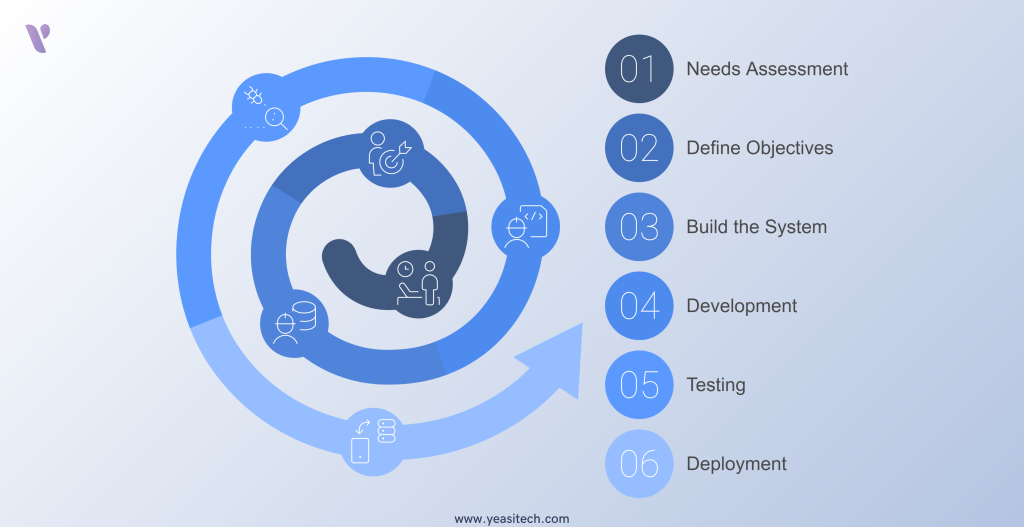
The process of developing a hospital management system is intricate and has to be carefully planned and carried out. The following are the necessary steps to help you:
- Needs Assessment: Start by examining the hospital’s requirements. Speak with medical professionals, nurses, and staff members to learn about their needs and challenges.
- Define Objectives: Clearly state the hospital management system objectives. Decide which features like the ability to handle patient data, schedule appointments, and bill are important.
- Build the System: Make a thorough design that covers the database structure, user interface, and software architecture. Make sure the design is both easily navigable and scalable.
- Development: Based on the design requirements, start developing code. When building the system, use strong programming languages and frameworks. Test often and implement features gradually.
- Testing: To find and address issues, thoroughly test the system. To make sure the program lives up to user expectations and adheres to industry standards, do usability testing.
- Deployment: Phased implementation of the hospital management system (HMS) will reduce disturbance. Train hospital employees and make sure the switch from the previous system goes well.
- Maintenance and Support: Following deployment, provide regular support and updates to resolve any problems and take user input into consideration for future improvement.
Real-Life Case Studies
Let’s look into real-life success stories and how hospital management systems helped them grow one by one in depth:
1. Mayo Clinic
Project Overview: To improve clinical workflows, expedite patient records, and increase decision-making throughout its multi-state network, the internationally renowned Mayo Clinic deployed a centralized HMS. The system combined scheduling, billing, telemedicine, and Electronic Health Records (EHR).
Development Cost: Estimated $1.5–$2 billion (including infrastructure upgrades and staff training)
Impact:
- 30% reduction in patient admission processing time.
- Improved patient outcomes with AI-powered diagnostics and treatment recommendations.
- Enhanced coordination across multiple hospitals for continuity of care.
“Our HMS has revolutionized patient care, allowing us to deliver personalized and efficient treatment across our network.” – Dr. Gianrico Farrugia, CEO, Mayo Clinic
2. Mount Sinai Health System (USA)
Project Overview: Mount Sinai Health System implemented a next-generation AI-powered HMS with blockchain-based patient record security, AI-assisted diagnostics, and automated insurance claim processing.
Development Cost: Estimated $500–$800 million.
Impact:
- 40% faster insurance claim approvals with automated processing.
- Improved predictive analytics for patient care, reducing readmission rates by 18%.
- Enhanced data security using blockchain technology for patient records.
“Technology in HMS is not just about efficiency; it’s about ensuring every patient gets the right care at the right time.” – Dr. Kenneth L. Davis, CEO, Mount Sinai Health System
3. Cleveland Clinic
Project Overview: To improve patient care and simplify resource management, Cleveland Clinic implemented an AI-driven HMS with cloud-based EHR, predictive analytics, and automated appointment booking.
Development Cost: Estimated $1–$1.5 billion.
Impact:
- The administrative workload is reduced by 35%, freeing up staff members to concentrate more on patient care.
- Improved diagnostic precision with patient data analytics and AI-assisted imaging.
- 50% more remote consultations were conducted as a result of the expansion of telehealth services.
With our HMS, we have been able to provide more efficient, data-driven, and patient-centered care.” – Dr. Tom Mihaljevic, CEO, Cleveland Clinic
You can also read YeasiTech’s Case Study on developing an AI-driven Digital Health Platform:

Hospital Management Software Development Costs Breakdown
Let’s break down the costs associated with hospital management system software for healthcare facilities. The following figures are derived from the expertise of our software developers in developing similar apps and from industry norms in the field of IT.
Please get in touch with our team if you would like a customized software estimate. Our team will assess your needs as a business and as a product before presenting an elaborate cost estimate.
Tips for Saving on Hospital Management System Development
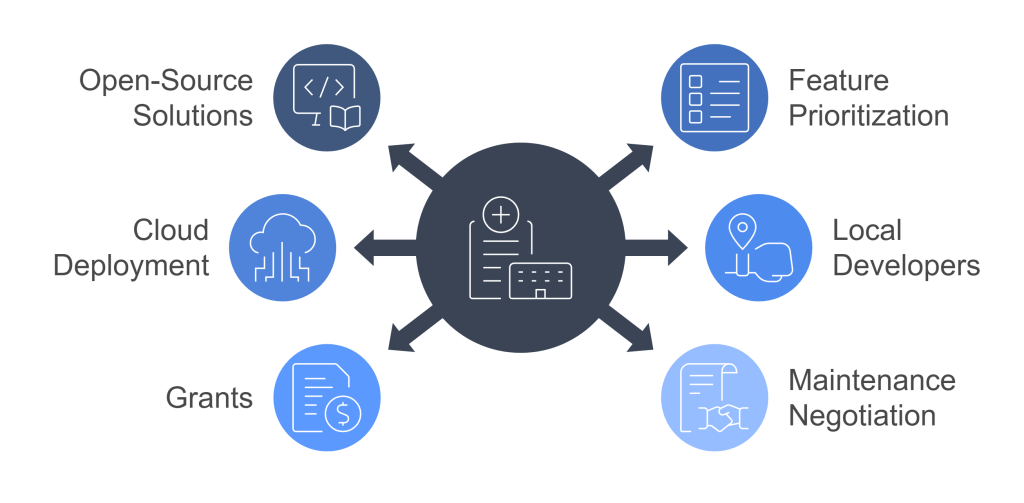
- Opt for Open-Source Solutions: Start with an open-source HMS and customize it to reduce costs.
- Prioritize Features: Focus on critical functionalities in phase one; expand later.
- Cloud Deployment: Reduce infrastructure costs by opting for a cloud-based system.
- Hire Local Developers: Lower costs by partnering with YeasiTech development teams.
- Leverage Grants: Apply for government or private grants aimed at healthcare digitization.
- Negotiate Maintenance Plans: Secure affordable long-term support contracts.
Checklist for Hospital Management System Development
- Initial Planning: Define the hospital’s needs (patient management, billing, reporting, etc.). Identify scalability requirements.
- Budgeting: Determine the total available budget. Factor in ongoing maintenance and training costs.
- Technology Selection: Choose between off-the-shelf, open-source, or custom solutions. Decide on cloud-based or on-premise deployment.
- Compliance: Ensure the hospital management system adheres to local and international healthcare standards like HIPAA or GDPR.
- Testing and Training: Conduct thorough testing across modules. Provide training for staff and administrators.
Wrapping Up
More hospitals are shifting their operations to digital systems. A hospital database management system helps streamline a healthcare organization’s workflow and data management. Whether you’re looking for a pre-built solution or planning to create a custom online clinic management system, YeasiTech can help. Reach out to make your vision a reality
Contact us today to discuss your requirements and take the first step toward transforming your hospital’s operations!
FAQ’s
1. What is the cost of developing a Hospital Management System in 2025?
The cost can range from $5,000 to $10,000 or more, depending on factors like system complexity, features, platform (web or mobile), and geographical location of the development team.
2. What factors influence the development cost?
Key factors include the scope of features (e.g., patient management, billing, telemedicine), customization, scalability, technology stack, integration with existing systems, and compliance with healthcare regulations like HIPAA or GDPR.
3. How long does it take to develop a Hospital Management System?
Development timelines range from 6 months to over 18 months, depending on the project’s complexity, the size of the development team, and the inclusion of advanced features like AI or machine learning.
4. Can I reduce costs by using pre-built solutions?
Yes, pre-built solutions or SaaS platforms can significantly lower initial costs, typically starting at $1,000 to $10,000 per year, but they may have limitations in customization and scalability compared to custom-built systems.