
Imagine earning money consistently from your unoccupied room. Or booking a cozy mountain cabin from your phone in just minutes. That’s the magic platforms like Airbnb have brought to the world. And even in 2026, their influence continues to grow.
Creating an app like Airbnb in 2026 is about more than just duplicating a billion-dollar idea; it’s about applying a tried-and-true business plan to address major issues, enter growing markets, and generate scalable revenue streams. They are shaping our way of earning, exploring, and living. Whether you are a real estate agent, startup creator, or an inquisitive businessperson, one question is undoubtedly at the forefront of your mind:
“What’s the real cost of building an app like Airbnb in 2026?”
This blog post explains everything clearly — the costs, main features, market trends, how it’s built, and how you can create your version of Airbnb without spending too much, even if you don’t know much about tech. No worries! The guide uses simple language, useful tips, fun facts, and easy examples to help beginners.
Let’s get started!
Table of Contents
- Quick Commerce Apps Like Airbnb: Market Overview & Growth
- What Are the Benefits of Building an App Like Airbnb?
- What Are the Features of Apps Like Airbnb?
- How to Develop an App Like Airbnb: Steps and Guide
- Tools & Tech Stack Typically Used
- How Much Does It Cost to Make an App Like Airbnb?
- Factors Influencing the Cost to Build an App Like Airbnb
- Factors Influencing the Cost to Build an App Like Airbnb
- Key Development Challenges in Building Apps Like Airbnb
- Real Experience You Can Trust
- Actionable Tips to Minimize Costs
- Conclusion: So, Is It Worth It?
- Ready to Build Your Airbnb-Like App?
- FAQS
Quick Commerce Apps Like Airbnb: Market Overview & Growth
Instead of just duplicating a billion-dollar idea, developing an app like Airbnb in 2026 involves applying a tried-and-true business plan to address pressing problems, enter growing markets, and generate scalable revenue streams. Let’s talk about the primary advantages for business owners, startups, and groups like yours.
Airbnb’s Impact on the Quick Commerce Ecosystem
Quick commerce typically refers to speedy delivery and instant service. In the case of Airbnb, it’s all about:
- Fast booking of homes, apartments, and unique stays
- Instant messaging with hosts and guests
- On-demand check-ins, experiences, and support
That’s quick commerce applied to travel!
Market Statistics in 2026
- Airbnb’s revenue in Q1 2025: $2.6 billion, up 13% YoY.
- The global vacation rental market is projected to hit $121 billion by 2026, according to Statista.
- Over the previous year, Airbnb has grown by more than 30% in tier-2 and tier-3 cities in India alone.
- 60% of millennial travelers prefer vacation rentals over hotels, according to a Skift report.
Why This Matters If You’re Building a Similar App to Airbnb?
As consumers become more specific in their needs, localized, personalized Airbnb-style apps are gaining serious traction. Think hyperlocal tourism in India, eco-conscious travelers in Europe, or Gen Z-friendly “stay-and-vlog” spaces.
In short: There’s never been a better time to launch your version of Airbnb.
What Are the Benefits of Building an App Like Airbnb?
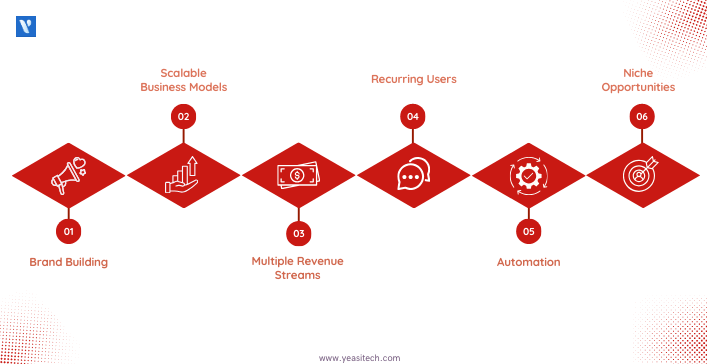
Developing an app similar to Airbnb in 2026 is about using a tested business strategy to solve real-world issues, break into expanding markets, and create scalable revenue streams, not merely copying a billion-dollar concept. Let us discuss the main benefits for entrepreneurs, startups, and companies such as yours.
1. Scalable Business Model
Once the platform is built, it operates 24/7 and can be scaled across cities, states, or even globally. Unlike hotels or property companies, you don’t need to own any property.
- Hosts bring the supplies.
- You focus on tech, trust, and traffic.
- The platform scales as more users join.
That’s why Airbnb became a $100B company without owning a single room. This is known as a zero-inventory model—it’s lean, profitable, and scalable.
2. Multiple Revenue Streams
You’re not locked into just one way to earn. With an app like Airbnb, you can generate money through:
- Booking commissions
- Premium host features
- Ads & experiences
- Subscription plans
- Sponsored listings
- In-app concierge or travel services
3. Recurring Users = Lower Acquisition Costs
Once users love your platform, they stick around.
- Hosts re-list multiple properties
- Travelers use the app for all future trips
- Referrals become a strong source of organic growth
In 2024, Airbnb reported that more than 85% of bookings came from repeat users.
4. Tech-Enabled Automation Reduces Operational Burden
Modern Airbnb-style platforms use automation to:
- Handle check-in/check-out
- Process payments
- Send notifications & reminders
- Auto-respond to FAQs via chatbots
- Manage calendar syncing with iCal
This drastically lowers the cost of support staff and helps you scale faster.
5. Build a Brand Around Trust and Community
If done right, your platform won’t just be a booking tool, it’ll become a community.
- Hosts will grow their income through you
- Travelers will discover real stories, places, and people
- Your brand will stand for access, adventure, and authenticity
Airbnb expanded by enabling hosts and guests to trust strangers through technology.
6. Opportunity to Niche Down
You don’t have to build the “next Airbnb for the whole world.” You can build:
- An Airbnb for pet-friendly travel
- An Airbnb for rural India experiences
- An Airbnb for remote work stays in Goa, Himachal, and Udaipur
- An Airbnb for female solo travelers
- An Airbnb for students or professionals
What Are the Features of Apps Like Airbnb?
When developing an app like Airbnb, features are important. They’re more than simply a “nice to have”; they affect trust, create or break the user experience, and ultimately decide whether or not consumers book or bounce. Let’s break it down in a super simple way:
1. User Side (Guests)
2. Host Side
3. Admin Panel (Your Side)
How to Develop an App Like Airbnb: Steps and Guide
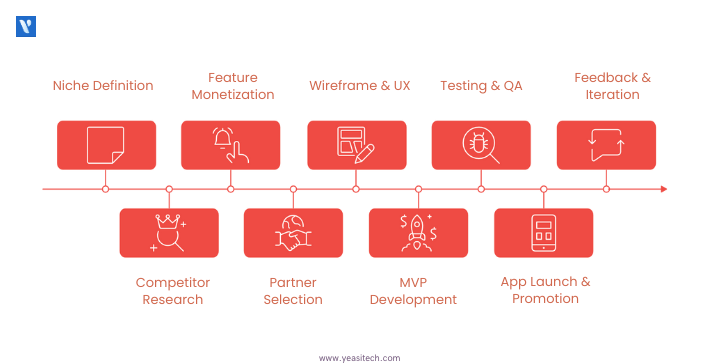
Developing an app like Airbnb may seem difficult, and it is, but with the correct plan, it is a clever and doable process. Here’s a step-by-step breakdown anyone can follow:
Step 1: Define Your Niche and Audience
Don’t try to clone Airbnb. Find your own distinct angle instead.
Try this:
- Are you developing for students, pet owners, luxury tourists, or digital nomads?
- Will you target a nation, a city, or a worldwide audience?
- Will you offer property stays, experiences, or both?
Example Niches:
- Staycations for remote workers in India
- Rentals for medical tourism near hospitals
- Women-only travel accommodation
Step 2: Research Your Competitors
Study:
- Airbnb (of course!)
- Vrbo, Booking.com, OYO, Plum Guide
- Local or niche apps in your market
Discover their advantages, disadvantages, and user grievances. Goldmines include resources like G2, Trustpilot, Reddit, and Play Store reviews.
Step 3: Finish the Features and Monetization Plan
From the features we discussed earlier, choose what fits your budget and goals. Not everything needs to go in the first version (MVP).
Also, decide how you’ll make money:
- Commission per booking?
- Featured listings for hosts?
- Monthly subscriptions for premium tools?
Step 4: Choose the Right Development Partner
If you’re not a techie (most founders aren’t), this is crucial. Look for a tech company like YeasiTech that:
- Specializes in app + backend + admin dashboard
- Understands marketplace platforms
- Offers UI/UX design and scalability
Tip: Ask to see past work, tech stack recommendations, and what they’ll use for chat, payments, maps, etc.
Step 5: Build a Wireframe and UX Design
Before coding, design a wireframe:
- Visual blueprint of every screen
- Shows navigation, buttons, filters, etc.
- Helps prevent future confusion or extra costs
Tools used: Figma, Adobe XD, Sketch
“Design isn’t just how it looks, it’s how it works.” — Steve Jobs
Step 6: Develop the MVP
This version should include only core features to launch fast and test your idea. Typical MVP includes:
- User registration
- Listings
- Search and filter
- Booking and payments
- Reviews
- Chat
The MVP helps get real feedback from users before scaling up.
Step 7: Test, Test, and Test Again
In travel apps, quality control is essential. You should check for:
- Functionality issues (such as unsuccessful booking)
- Problems with security (such as payment leakage)
- Speed and responsiveness
- Compatibility across devices (iOS, Android, tablets)
Step 8: Launch and Promote the App
You’re ready to go live on:
- App Store (iOS)
- Google Play Store (Android)
- Web (if you’re also offering a desktop version)
Next, start marketing:
- Paid ads (Google, Meta)
- Influencer travel blogs
- Host onboarding events
- Referral programs
Step 9: Get Input & Continue to Improve
- Track behavior with programs like Mixpanel, Google Analytics, or Hotjar.
- Directly ask users using feedback prompts
- Improve UX, add new features, and fix bugs.
Airbnb was once a simple website renting out 3 air mattresses. It grew through constant iteration and feedback.
Tools & Tech Stack Typically Used
How Much Does It Cost to Make an App Like Airbnb?
Let’s break down the actual budget—especially for Indian entrepreneurs in 2026.
MVP Development Cost Breakdown (INR)
YeasiTech offers full MVP development at affordable prices for ready-to-scale, secure, and beautifully designed vacation rental apps.
Factors Influencing the Cost to Build an App Like Airbnb
Factors Influencing the Cost to Build an App Like Airbnb
Key Development Challenges in Building Apps Like Airbnb
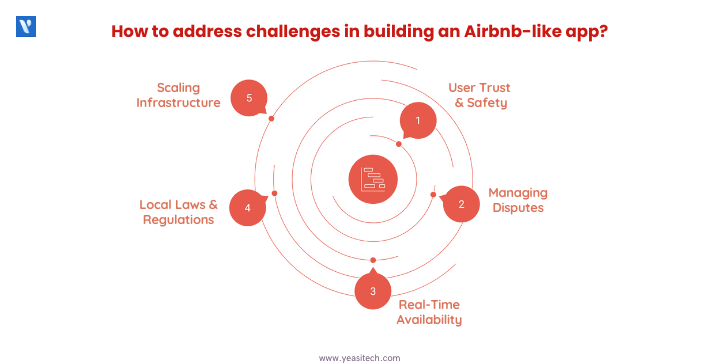
It takes more than simply attractive panels and buttons to create an app like Airbnb; it also requires addressing some very serious operational, technological, and user-centric issues. The following are the main obstacles that most companies encounter (as well as solutions):
Challenge 1: User Trust & Safety
Solution:
- KYC verification
- Verified property photos
- Host & guest ratings
Challenge 2: Managing Cancellations & Disputes
Solution:
- Transparent policies
- Automated refunds
- Dispute resolution system with human support
Challenge 3: Real-Time Availability
Solution:
- Sync calendars with Google/Outlook
- Use a robust backend for instant updates
Challenge 4: Local Laws & Regulations
Solution:
- Add a checkbox during host signup to accept city rules
- Use region-specific compliance plugins (esp. for taxes)
Challenge 5: Scaling Infrastructure
Solution:
- Use AWS Auto Scaling
- Load balancers for traffic management
Real Experience You Can Trust
At YeasiTech, we’ve built marketplaces like Airbnb with proven success. One notable example is LuckyBackyards — the first backyard booking platform.
LuckyBackyards connects homeowners with people seeking outdoor spaces for yoga, parties, pets, or relaxation. Features include:
- Easy host listings with real-time availability
- Personalized guest discovery with map-based search
- Secure Stripe-powered payments and split payouts
The results speak for themselves: 4,200+ bookings in the first 2 months and 72% repeat guests in month one.
You can explore the full LuckyBackyards case study here to learn about the journey, technical solutions, and real-world impact.
Actionable Tips to Minimize Costs
- Go for MVP First: Launch with essential features → Get feedback → Scale gradually.
- Use No-Code/Low-Code Tools: Use No-Code/Low-Code Tools
- Outsource Smartly: Hire Indian or Eastern European teams to save 50–70% on cost.
- Reuse Open-Source Templates: Don’t reinvent the wheel—use ready-made UI kits or clone scripts (but customize them well).
- Keep UI Simple: Fancy animations are great, but basic, clean designs convert better (and cost less to build).
Conclusion: So, Is It Worth It?
Absolutely. With travel demand rising and Airbnb’s model proving profitable, there’s a huge opportunity for new players—especially in niche markets.
Building an Airbnb-like app in 2026 is doable, affordable, and potentially highly profitable—if done smartly. You don’t need to break the bank. You just need the right team, clear goals, and a smart launch strategy.
Ready to Build Your Airbnb-Like App?
At YeasiTech, we help startups and founders like you build scalable, beautiful, and affordable apps from scratch—whether you want a simple MVP or a full-fledged Airbnb competitor.
Let’s Talk → Contact Us
Or Schedule a Free 30-Min Strategy Call
Let’s bring your app idea to life—on time and within budget.
FAQS
1. What are the must-have features for an Airbnb-style app?
Key features include user registration, property listings, search & filters, booking & payments, in-app chat, host dashboard, booking calendar, reviews & ratings, and an admin panel to manage users and revenue.
2. How long does it take to build an Airbnb-like app?
For a basic MVP, development usually takes 3–5 months. A full-featured app with advanced features, multiple platforms, and integrations may take 6–12 months, depending on the team and complexity.
3. How can I reduce costs when building an Airbnb-style app?
You can minimize costs by starting with an MVP, using no-code/low-code platforms, outsourcing to affordable yet skilled teams, reusing open-source templates, and keeping the UI simple and functional.